Oilfield Drilling Chemical Solutions
Application Scenarios
Shale Formation Drilling
Deep & Ultra-Deep Wells
Offshore Drilling Platforms
HPHT & Complex Formations
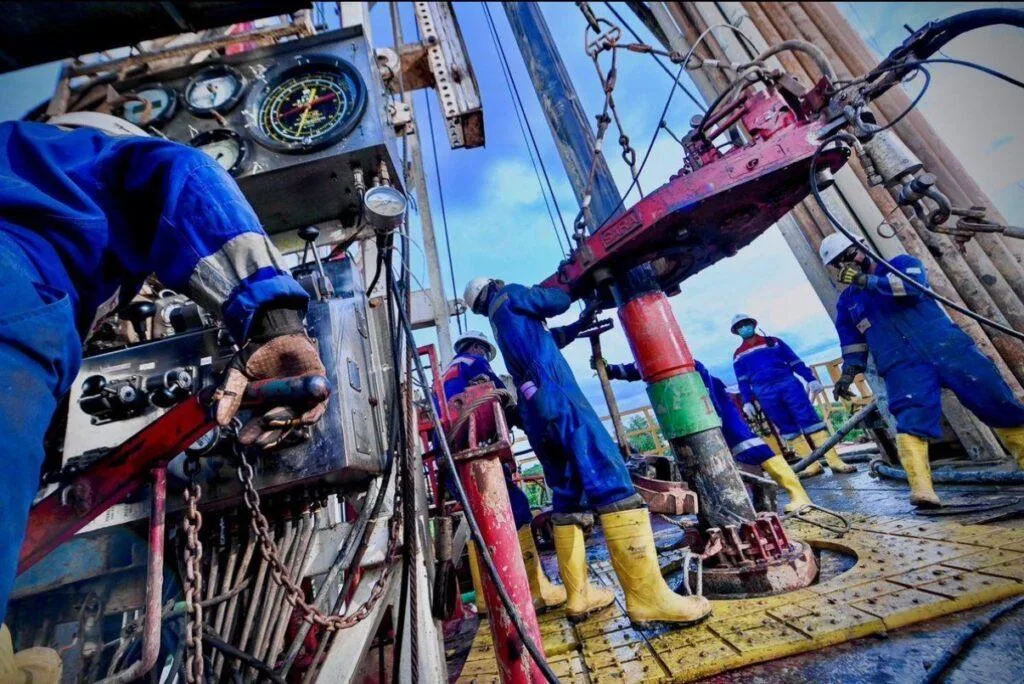
Drilling fluid—also known as drilling mud—plays a critical role in transporting cuttings, cooling and lubricating the drill bit, stabilizing the wellbore, balancing formation pressure, and protecting oil and gas reservoirs. Its performance directly impacts equipment safety, operational efficiency, and overall project costs.
Jinxiang Chemical provides comprehensive fluid chemistry solutions for both water-based mud (WBM) and oil-based mud (OBM) systems. Our product portfolio supports wellbore stability, shale inhibition, high-temperature rheology control, fluid loss reduction, and lubrication, while addressing complex formation challenges; our solutions are suitable for onshore and offshore operations, including deep wells, horizontal and directional wells, and high-pressure/high-temperature (HPHT) environments.
Solution Overview
Oilfield drilling operations frequently face challenges such as wellbore instability, shale hydration, excessive fluid loss, high torque and drag, poor lubrication, and thermal degradation under elevated temperatures. These issues can increase stuck pipe risks, reduce drilling efficiency, and lead to higher non-productive time and operating costs.
Jinxiang Chemical develops and supplies drilling fluid additives for different mud systems and geological conditions. By combining polymers, shale inhibitors, fluid loss additives, lubricants, rheology modifiers, and temperature-resistant materials, we help customers build stable and efficient drilling fluid systems tailored to field requirements.
Swipe horizontally to view the complete table.
| Product Name | Performance Features | Application Scope |
|---|---|---|
| Potassium Polyacrylamide (K-PAM) | Provides shale inhibition, encapsulation, and rheology improvement. Stabilizes shale formations while reducing hydration and dispersion. | Shale and water-sensitive formations, horizontal wells, and deep well drilling. |
| FT-342 Lubricant | Improves lubricity, reduces friction and torque, minimizes stuck pipe risk, and improves drilling efficiency. | Extended-reach wells, directional drilling, and high-friction drilling environments. |
| SMC High-Temperature Stabilizer | Improves rheological stability and maintains drilling fluid performance at elevated temperatures. | High-temperature wells and deep drilling operations. |
| SPNH Fluid Loss Additive | Reduces fluid loss, forms a dense filter cake, and improves wellbore stability. | Water-based drilling fluid systems and complex formations. |
| Potassium Chloride (KCl) | An inorganic shale inhibitor that suppresses clay hydration through osmotic pressure and improves wellbore integrity. | Water-sensitive shale formations and conventional drilling operations. |
| Potassium Humate | An economical shale stabilizer providing lasting inhibition while improving lubricity and rheological properties. | Shale gas wells, deep wells, and complex formations. |
Technical Support
Mud System Optimization
Optimize drilling fluid systems based on geological conditions to improve wellbore stability and drilling performance.
Laboratory Testing
Evaluate drilling fluid compatibility and product performance through laboratory testing before field application.
Product Selection
Recommend suitable drilling fluid additives according to formation characteristics, temperature, salinity, and drilling requirements.
Custom Formulation
Develop customized drilling fluid formulations for challenging formations, deep wells, and special drilling environments.