Polyanionic Cellulose (PAC) for Drilling Fluids
Product Introduction
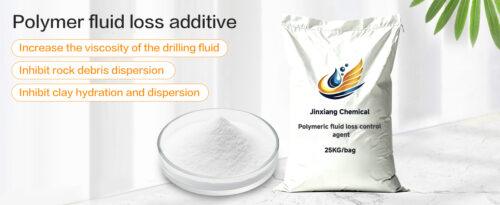
Polyanionic Cellulose (PAC) is a high-performance, water-soluble cellulose polymer offering excellent fluid loss control, viscosifying capabilities, wellbore protection, and suspension properties. It effectively enhances drilling fluid stability, minimizes filtrate invasion, maintains wellbore integrity, and reduces the risk of downhole complications.
This product exhibits excellent resistance to salt and calcium, as well as superior thermal stability, maintaining consistent performance in fresh water, seawater, and high-salinity drilling fluid systems. It is suitable for complex geological formations and diverse drilling environments. Jinxiang Chemical offers two grades—Low Viscosity (PAC-LV) and High Viscosity (PAC-HV)—to meet specific rheological and fluid loss control requirements across various drilling conditions.
Product Features
- Excellent fluid loss control performance
- Effective viscosifying capability
- Enhances borehole wall stability
- Superior salt and calcium tolerance
- Good thermal stability
- Compatible with most water-based drilling fluid systems
- Rapid dissolution and ease of use
- Consistent product quality; suitable for various complex formations
Applications
- Water-based drilling fluid systems
- Oil and gas drilling
- Shale gas drilling
- Water well drilling
- Geothermal well drilling
- Directional and horizontal drilling
- Drilling in high-salinity formations
Product Advantages
- Consistent product quality
- OEM customization supported
- Direct supply from the manufacturer
- Comprehensive technical support
- Product performance adjustable to meet customer requirements
Packaging and Storage:
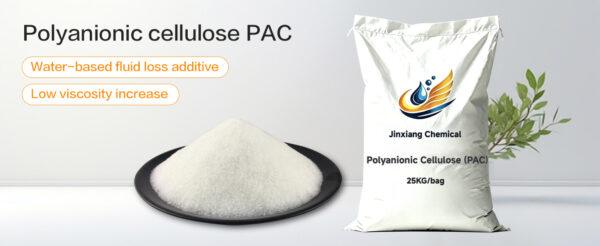
- 25kg kraft paper bags
- OEM packaging supported
- Store in a cool, dry, and well-ventilated area; avoid moisture and direct sunlight. Reseal promptly after opening.
FAQ
1. What is the primary function of Polyanionic Cellulose (PAC) in oil drilling fluids?
PAC is primarily used as a fluid loss control agent, viscosifier, and rheology modifier; it helps reduce fluid loss, improve filter cake quality, and maintain the stability of the drilling fluid system.
2. What is the difference between PAC-LV and PAC-HV?
PAC-LV (Low Viscosity) is mainly used to control fluid loss while minimizing the impact on drilling fluid viscosity; PAC-HV (High Viscosity) controls fluid loss while providing a more significant viscosifying and rheology-modifying effect. Customers wishing to reduce fluid loss without significantly increasing viscosity typically prioritize PAC-LV.
3. For which drilling fluid systems is PAC primarily suitable?
PAC is mainly used in water-based drilling fluids (WBM) and is applicable to fresh water, brine, and various polymer-based drilling fluid systems.
4. How does PAC reduce drilling fluid fluid loss?
PAC is a water-soluble polymer that helps improve the distribution of solid particles and the structure of the filter cake within the drilling fluid. It facilitates the formation of a denser, lower-permeability filter cake, thereby reducing the invasion of the liquid phase into the formation.
5. Can PAC be used in brine drilling fluids?
Yes. Appropriate grades of PAC exhibit good tolerance to saline environments and can be used in brine drilling fluid systems. However, specific salt tolerance should be verified through testing based on the type of salt, concentration, temperature, and product grade.
6. Can PAC be used in high-temperature drilling fluids?
It can be used in drilling fluid systems within a certain temperature range, though elevated temperatures may affect polymer performance. For high-temperature wells, it is recommended to conduct hot-rolling aging and fluid loss tests based on actual bottom-hole temperatures and, if necessary, use it in conjunction with high-temperature-resistant fluid loss control agents.
7. Can PAC be used with KCl, K-PAM, PHPA, and xanthan gum?
Yes. In suitable water-based drilling fluid formulations, PAC can be used in conjunction with additives such as **KCl, K-PAM, PHPA, and Xanthan Gum** to achieve fluid loss control, shale inhibition, encapsulation, and the adjustment of rheological and cuttings-carrying properties.
8. What is the difference between PAC and CMC?
Both can be used for fluid loss and rheology control in water-based drilling fluids. PAC typically emphasizes high-efficiency fluid loss control and compatibility with various drilling fluid systems; CMC also functions to increase viscosity and reduce fluid loss. The specific choice should be determined based on salinity, temperature, target viscosity, and fluid loss requirements.
9. When should PAC-LV be selected?
PAC-LV is the preferred choice when fluid loss is high, but the drilling fluid viscosity is already elevated or further viscosity increases are undesirable.
10. When should PAC-HV be selected?
PAC-HV is a suitable choice when there is a need to reduce fluid loss while simultaneously improving drilling fluid viscosity, suspension capabilities, and cuttings-carrying performance.
11. Can PAC help improve the filter cake?
Yes. PAC helps form a dense, low-permeability filter cake, thereby reducing filtrate invasion into the formation and aiding in wellbore stability and reservoir protection.
12. What is the recommended dosage of PAC?
The specific dosage depends on the drilling fluid system, salinity, temperature, solids content, and API/HTHP fluid loss control targets. It is recommended to determine the optimal dosage through laboratory formulation testing rather than relying on a fixed addition ratio.
13. What are the packaging specifications for PAC?
Standard packaging is 25 kg/bag; customized packaging is also available to meet specific customer needs or export/shipping requirements.
14. Can you provide the COA, TDS, and MSDS for PAC?
Yes, technical documents such as COA, TDS, and MSDS can be provided. Specific parameters—such as viscosity, fluid loss performance, moisture content, and purity—are subject to the actual product grade and the test results of the specific batch.