السليلوز متعدد الأنيونات (PAC) المستخدم في سوائل الحفر
مقدمة عن المنتج
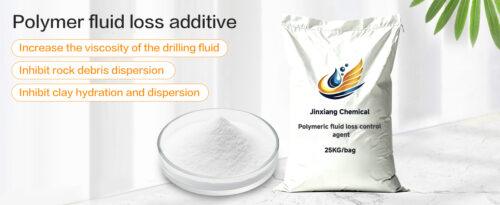
السليلوز متعدد الأنيونات (PAC) هو بوليمر سليلوزي عالي الأداء وقابل للذوبان في الماء، يوفر تحكمًا ممتازًا في فقدان السوائل، وقدراتًا على زيادة اللزوجة، وحمايةً لجدار البئر، وخصائص تعليق. وهو يعزز بشكل فعال استقرار سائل الحفر، ويقلل من تسرب المرشح إلى أدنى حد، ويحافظ على سلامة جدار البئر، ويقلل من مخاطر حدوث مضاعفات في قاع البئر.
يتميز هذا المنتج بمقاومة ممتازة للملح والكالسيوم، فضلاً عن استقرار حراري فائق، مما يضمن أداءً ثابتًا في المياه العذبة ومياه البحر وأنظمة سوائل الحفر عالية الملوحة. وهو مناسب للتكوينات الجيولوجية المعقدة وبيئات الحفر المتنوعة. تقدم شركة Jinxiang Chemical درجتين من هذا المنتج — اللزوجة المنخفضة (PAC-LV) واللزوجة العالية (PAC-HV) — لتلبية المتطلبات المحددة المتعلقة بالخصائص الريولوجية والتحكم في فقدان السوائل في مختلف ظروف الحفر.
ميزات المنتج
- أداء ممتاز في التحكم في فقدان السوائل
- قدرة فعالة على زيادة اللزوجة
- يعزز استقرار جدران الآبار
- تحمل فائق للملح والكالسيوم
- استقرار حراري جيد
- متوافق مع معظم أنظمة سوائل الحفر ذات الأساس المائي
- ذوبان سريع وسهولة في الاستخدام
- جودة منتجات ثابتة؛ مناسبة لمختلف التكوينات المعقدة
التطبيقات
- أنظمة سوائل الحفر ذات الأساس المائي
- حفر آبار النفط والغاز
- التنقيب عن الغاز الصخري
- حفر آبار المياه
- حفر آبار الطاقة الحرارية الأرضية
- الحفر الموجه والأفقي
- الحفر في التكوينات ذات الملوحة العالية
مزايا المنتج
- جودة منتجات ثابتة
- يتم دعم التخصيص وفقًا لمتطلبات المصنع الأصلي (OEM)
- توريد مباشر من الشركة المصنعة
- دعم فني شامل
- أداء المنتج قابل للتعديل لتلبية متطلبات العملاء
التعبئة والتخزين:
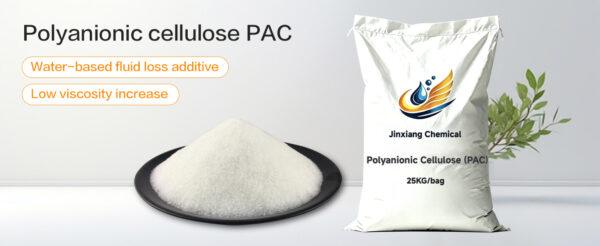
- أكياس من ورق الكرافت سعة 25 كجم
- دعم التغليف وفقًا لمعايير الشركات المصنعة للمعدات الأصلية (OEM)
- يُحفظ في مكان بارد وجاف وجيد التهوية؛ ويجب تجنب الرطوبة وأشعة الشمس المباشرة. يُغلق الغطاء بإحكام فور فتح العبوة.
الأسئلة الشائعة
1. What is the primary function of Polyanionic Cellulose (PAC) in oil drilling fluids?
PAC is primarily used as a fluid loss control agent, viscosifier, and rheology modifier; it helps reduce fluid loss, improve filter cake quality, and maintain the stability of the drilling fluid system.
2. What is the difference between PAC-LV and PAC-HV?
PAC-LV (Low Viscosity) is mainly used to control fluid loss while minimizing the impact on drilling fluid viscosity; PAC-HV (High Viscosity) controls fluid loss while providing a more significant viscosifying and rheology-modifying effect. Customers wishing to reduce fluid loss without significantly increasing viscosity typically prioritize PAC-LV.
3. For which drilling fluid systems is PAC primarily suitable?
PAC is mainly used in water-based drilling fluids (WBM) and is applicable to fresh water, brine, and various polymer-based drilling fluid systems.
4. How does PAC reduce drilling fluid fluid loss?
PAC is a water-soluble polymer that helps improve the distribution of solid particles and the structure of the filter cake within the drilling fluid. It facilitates the formation of a denser, lower-permeability filter cake, thereby reducing the invasion of the liquid phase into the formation.
5. Can PAC be used in brine drilling fluids?
Yes. Appropriate grades of PAC exhibit good tolerance to saline environments and can be used in brine drilling fluid systems. However, specific salt tolerance should be verified through testing based on the type of salt, concentration, temperature, and product grade.
6. Can PAC be used in high-temperature drilling fluids?
It can be used in drilling fluid systems within a certain temperature range, though elevated temperatures may affect polymer performance. For high-temperature wells, it is recommended to conduct hot-rolling aging and fluid loss tests based on actual bottom-hole temperatures and, if necessary, use it in conjunction with high-temperature-resistant fluid loss control agents.
7. Can PAC be used with KCl, K-PAM, PHPA, and xanthan gum?
Yes. In suitable water-based drilling fluid formulations, PAC can be used in conjunction with additives such as **KCl, K-PAM, PHPA, and Xanthan Gum** to achieve fluid loss control, shale inhibition, encapsulation, and the adjustment of rheological and cuttings-carrying properties.
8. What is the difference between PAC and CMC?
Both can be used for fluid loss and rheology control in water-based drilling fluids. PAC typically emphasizes high-efficiency fluid loss control and compatibility with various drilling fluid systems; CMC also functions to increase viscosity and reduce fluid loss. The specific choice should be determined based on salinity, temperature, target viscosity, and fluid loss requirements.
9. When should PAC-LV be selected?
PAC-LV is the preferred choice when fluid loss is high, but the drilling fluid viscosity is already elevated or further viscosity increases are undesirable.
10. When should PAC-HV be selected?
PAC-HV is a suitable choice when there is a need to reduce fluid loss while simultaneously improving drilling fluid viscosity, suspension capabilities, and cuttings-carrying performance.
11. Can PAC help improve the filter cake?
Yes. PAC helps form a dense, low-permeability filter cake, thereby reducing filtrate invasion into the formation and aiding in wellbore stability and reservoir protection.
12. What is the recommended dosage of PAC?
The specific dosage depends on the drilling fluid system, salinity, temperature, solids content, and API/HTHP fluid loss control targets. It is recommended to determine the optimal dosage through laboratory formulation testing rather than relying on a fixed addition ratio.
13. What are the packaging specifications for PAC?
Standard packaging is 25 kg/bag; customized packaging is also available to meet specific customer needs or export/shipping requirements.
14. Can you provide the COA, TDS, and MSDS for PAC?
Yes, technical documents such as COA, TDS, and MSDS can be provided. Specific parameters—such as viscosity, fluid loss performance, moisture content, and purity—are subject to the actual product grade and the test results of the specific batch.