Drilling Fluid Filtration Control Guide
Drilling Fluid Loss Reducer | Lignite Resin SPNH
SPNH is used in water-based drilling fluids to help reduce filtrate loss, improve filter cake quality, and support more stable mud performance under demanding field conditions.
Fluid-loss control is one of the most important parts of water-based drilling fluid design. When too much liquid phase leaves the mud and invades the formation, the drilling team may face poor filter cake quality, increased filtrate invasion, higher differential sticking risk, and less stable wellbore conditions. راتنج الليغنيت SPNH is widely used as a practical drilling fluid loss reducer for systems that need better filtration control without unnecessarily destabilizing rheology.
For international buyers, SPNH should not be selected only by product name or price per ton. The real question is how the grade performs in the actual mud system: fresh water or brine, expected temperature, solids content, current filtration level, and interaction with other polymers. That is why a professional purchasing decision should combine product data with application testing.
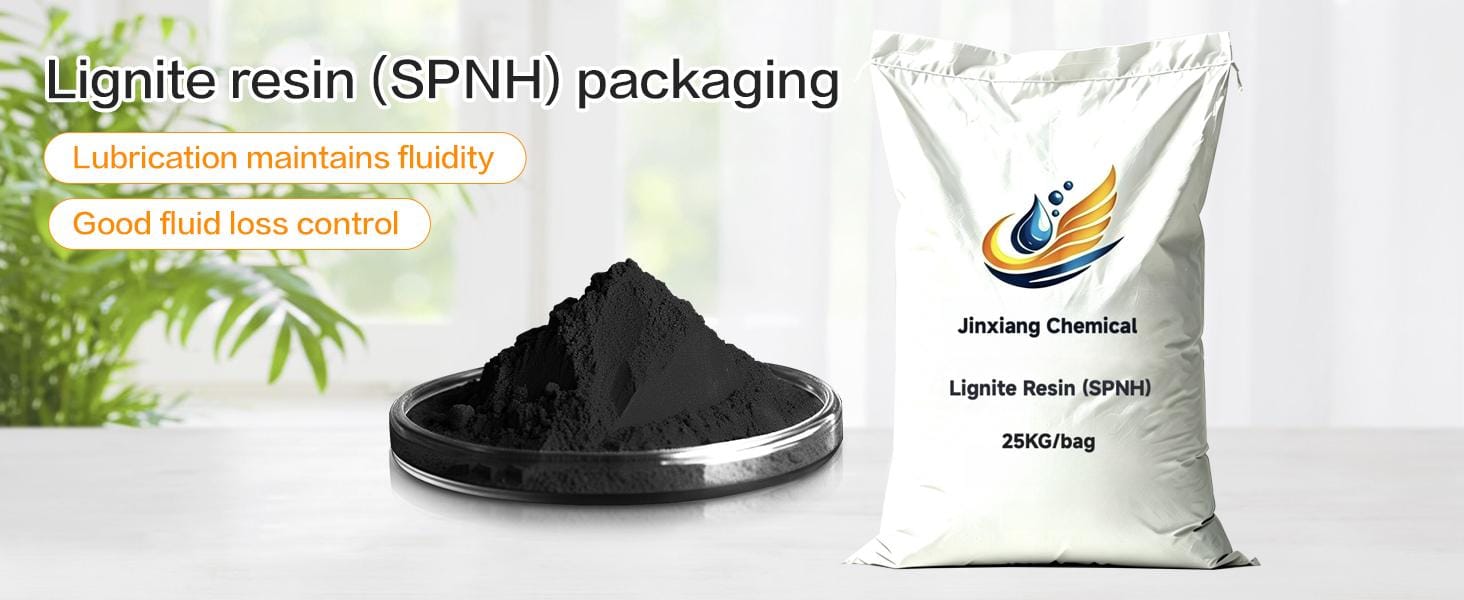
What Is Lignite Resin SPNH?
SPNH is a drilling-fluid treatment chemical primarily used as a fluid-loss-control additive. In a properly designed water-based mud, it helps reduce liquid loss to the formation and contributes to a tighter, more effective filter cake. It can also be considered in systems where higher temperature or salinity places additional stress on mud performance.
Why Does Fluid Loss Control Matter?
Filtration affects the way drilling fluid interacts with the formation. Excessive filtrate invasion can weaken sensitive zones and alter near-wellbore conditions. At the same time, a thick or poor-quality filter cake can increase drag and raise the risk of differential sticking. Effective fluid-loss control is therefore not just about achieving a lower laboratory number; it is about protecting the wellbore and keeping the overall system manageable.
Reduce Filtration
Helps limit the amount of liquid phase entering the formation during drilling.
Improve Filter Cake
Supports a tighter and more stable filter cake for better borehole protection.
Support System Stability
Can be combined with other drilling-fluid additives after compatibility testing.
Typical Applications of SPNH
- Water-based drilling fluids for oil and gas wells
- Mud systems requiring lower API or HTHP fluid loss
- Freshwater and saltwater systems after laboratory confirmation
- Deep or technically demanding wells where filtration must be controlled more tightly
- Formulations where filter cake improvement is needed without excessive rheology increase
How SPNH Fits into a Complete Mud System
SPNH usually works as part of a broader additive package. كربوكسي ميثيل السليلوز (CMC) and بوليانيونيك السليلوز (PAC) can also contribute to filtration control and viscosity management. Where low-shear rheology and cuttings transport are priorities, صمغ الزانثان may be useful. For shale inhibition and cuttings encapsulation, بولي أكريلاميد متحلل مائيًا جزئيًا (PHPA) can serve a different but complementary role.
Buyers comparing fluid-loss additives can also review Jinxiang Chemical’s Drilling Fluid Loss Control Additives guide and the Drilling Fluid Additives Buyer’s Checklist. These internal resources help connect the individual product to the wider treatment strategy.

What Should Be Tested Before a Bulk Order?
A meaningful evaluation should compare the untreated base mud with the SPNH-treated mud under the same conditions. Key observations can include API or HTHP fluid loss, filter cake quality, apparent viscosity, yield point, mixing behavior, and changes after hot rolling. If the field system contains salt or calcium, the laboratory test should reflect that chemistry as closely as possible.
A Practical Comparison Method
If two suppliers are being compared, use the same mud formulation, the same dosage, the same mixing sequence, and the same thermal-aging procedure. Then compare fluid loss, filter cake condition, rheology, and ease of handling. This makes the comparison more meaningful than simply looking at the lowest unit price. A cheaper product may require a higher dosage or cause less desirable changes in mud properties.
What Should Be Included in an SPNH RFQ?
A useful RFQ should include the mud type, freshwater or brine, salinity, expected temperature, current fluid-loss value, target performance, required quantity, packaging preference, and destination port. If the customer is replacing an existing grade, sending the current TDS or COA helps the supplier understand the benchmark.
What Makes a Strong SPNH Supplier?
International buyers should evaluate more than price. Useful criteria include batch-to-batch consistency, technical documentation, packaging quality, response speed, export experience, and the supplier’s ability to discuss the product in the context of a complete mud system. These factors matter because drilling-fluid chemicals need predictable performance across repeated shipments.
External Technical References
For additional context on how global suppliers present fluid-loss-control products, buyers can review Chevron Phillips Chemical’s DrisTROL™ Fluid Loss Additive. Another useful example of technical product positioning is Baroid EZ-MUD GOLD, which illustrates how drilling additives are described by function, compatibility, and field application.
Why Jinxiang Chemical?
Puyang Jinxiang Chemical supplies a range of water-based drilling-fluid chemicals, including راتنج الليغنيت SPNH. Buyers can request product information, TDS, COA, MSDS, and a commercial quotation based on the intended mud system and project conditions.
الأسئلة المتداولة
Is SPNH only a fluid-loss reducer?
Fluid-loss control is its primary role, but it can also contribute to filter cake quality and overall mud-system stability depending on the formulation.
Can SPNH be used in saltwater mud?
It can be evaluated in saline systems, but final dosage and compatibility should be confirmed in a lab test that reflects the actual salinity and temperature.
Can SPNH be used together with PAC or CMC?
Yes. These additives can be complementary when the mud system is properly balanced.
Need SPNH for a Drilling Fluid Project?
Send your mud type, salinity, temperature range, fluid-loss target, quantity, and destination port for product information and a project quotation.