
Potassium Polyacrylate (K-PAM) Shale Inhibitor
Présentation du produit
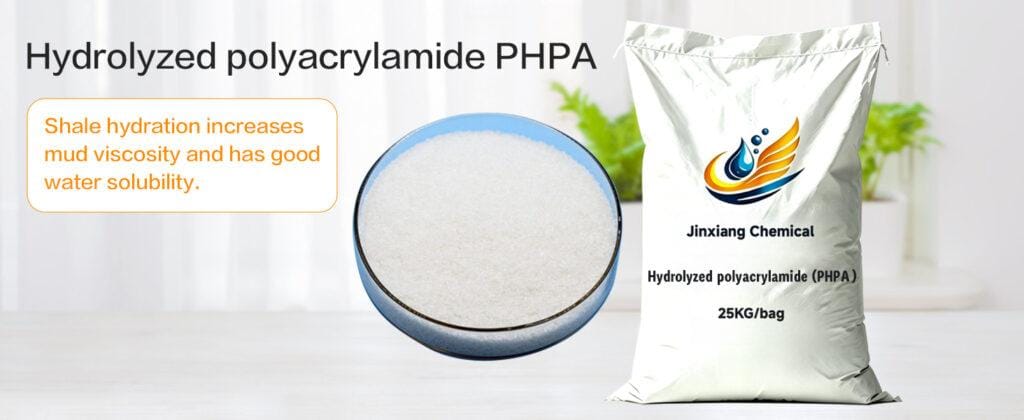
Potassium Polyacrylate (abbreviation: K-PAM), also known as potassium polyacrylamide salt, is a high-molecular water-soluble anionic polymer. It is polymerized and hydrolyzed with acrylamide and potassium hydroxide as raw materials. This product appears as white or light yellow free-flowing powder, featuring excellent water solubility, high viscosity, good temperature resistance and salt resistance. With active potassium ions inside the molecular chain, it can effectively inhibit the hydration and dispersion of clay minerals. K-PAM is widely used as drilling fluid additive, flocculant and thickener in petroleum drilling, geological exploration, mineral processing, wastewater treatment and agricultural soil improvement industries.
Caractéristiques du produit
- Excellent Inhibition Performance: The released potassium ions embed in clay crystal layers to prevent shale hydration expansion, effectively stabilize well walls and reduce borehole collapse risk.
- Good Filtration Reduction Effect: Form dense and thin filter cake on the well wall, reduce water loss of drilling fluid, and protect vulnerable water-sensitive formations.
- High Viscosity & Suspension: Increase drilling fluid viscosity, improve carrying capacity of cuttings, and prevent sedimentation of solid particles.
- Strong Compatibility: Good compatibility with various water-based drilling muds. It has excellent compatibility with common drilling additives such as CMC, sulfonated lignite asphalt powder and xanthan gum, no adverse reaction with other mud additives.
- Environmental & Safe: Non-toxic, non-corrosive, easy to degrade, low environmental pollution, suitable for various construction environments.
- Stable Chemical Properties: Excellent high temperature resistance, not easy to decompose in high-temperature deep well operation, stable performance in high-salinity water quality.
Application Fields
Petroleum & Geological Drilling
Wastewater Treatment
Agricultural & Horticulture
Usage Method
Conditionnement et stockage
- Conditionnement: 25 kg par sac en papier kraft avec sachet intérieur en plastique, ou emballage sur mesure selon les exigences du client.
- Conditions de stockage: À conserver dans un entrepôt sec, frais et aéré, à l'abri de l'humidité, de la pluie et de la lumière directe du soleil.
- Durée de conservation: 24 mois dans son emballage d'origine et dans des conditions de stockage normales.
- Remarque concernant les transports: Ce produit fait partie des produits chimiques généraux, non dangereux ; éviter toute contrainte excessive et tout mélange avec des substances corrosives pendant le transport.
Safety Instructions
- Évitez tout contact prolongé avec la peau et l'inhalation de poussière ; portez un masque et des gants de protection pendant l'utilisation.
- En cas de contact avec les yeux, rincer immédiatement et abondamment à l'eau claire.
- No flammable and explosive risk, keep away from strong oxidants.
Questions fréquentes
1. What is the primary function of Potassium Polyacrylate (K-PAM) in drilling fluids?
K-PAM is primarily used as a shale inhibitor, encapsulator, and drilling fluid additive. It helps inhibit clay hydration and dispersion and enhances the encapsulation of drill cuttings, thereby improving wellbore stability and drilling fluid performance.
2. For which drilling fluid systems is K-PAM primarily suitable?
It is mainly suitable for water-based mud (WBM) systems, including fresh water, brine, and inhibitive polymer systems.
3. How does K-PAM help stabilize the wellbore?
K-PAM adsorbs onto the surfaces of clay and drill cuttings, forming a protective polymer layer. This reduces clay hydration, dispersion, and the sludging of cuttings, thereby helping to maintain wellbore stability.
4. What is the difference between K-PAM and KCl?
Both are used for shale inhibition, but they function differently. KCl is an inorganic salt inhibitor, whereas K-PAM is a polymeric additive. They can be used together in appropriate drilling fluid formulations to achieve more comprehensive inhibition.
5. Can K-PAM be used with PHPA?
Yes. K-PAM can be used in conjunction with additives such as PHPA, KCl, PAC, and CMC, depending on system requirements. Specific compatibility and dosage should be determined through laboratory testing.
6. What is the potassium content of K-PAM?
The potassium content of our standard K-PAM products is controlled within the 11%–15% range. Official specifications and actual test results are subject to the specific product data sheet and the Certificate of Analysis (COA) for the relevant batch.
7. Does K-PAM provide fluid loss control?
In some water-based mud systems, K-PAM can provide auxiliary improvements to fluid loss and rheological properties; however, its primary value lies in shale inhibition, encapsulation, and wellbore stability. If fluid loss control is the main requirement, the formulation should incorporate PAC, CMC, modified starch, or specialized fluid loss control agents.
8. For which formations is K-PAM suitable?
It is suitable for drilling environments involving water-sensitive shale, mudstone, and reactive clays, and is particularly well-suited for water-based drilling fluid systems that require enhanced shale inhibition and cuttings encapsulation capabilities.
9. What is the recommended dosage for K-PAM?
The specific dosage depends on formation characteristics, the drilling fluid system, salinity, temperature, and target performance requirements. It is recommended to conduct laboratory compatibility and performance tests before determining the optimal dosage for field application.
10. What are the packaging specifications for K-PAM?
Standard packaging is 25 kg per bag; customized packaging is also available to meet export shipping requirements or specific customer needs.
11. Can you provide the COA, TDS, and MSDS for K-PAM?
Yes, technical documents such as the COA, TDS, and MSDS can be provided. The official COA will be based on test results from the actual production batch.
12. Is K-PAM suitable for oil and gas drilling?
Yes. K-PAM is a commonly used polymer additive in water-based oil and gas drilling fluids; it is used for shale inhibition, cuttings encapsulation, and wellbore stability control.
Vue de l’usine