Solutions pour fluides de forage à base d’eau
Domaines d’application
Forage dans les formations schisteuses
Puits profonds et ultraprofonds
Plateformes de forage en mer
Haute pression et haute température (HPHT) et formations complexes
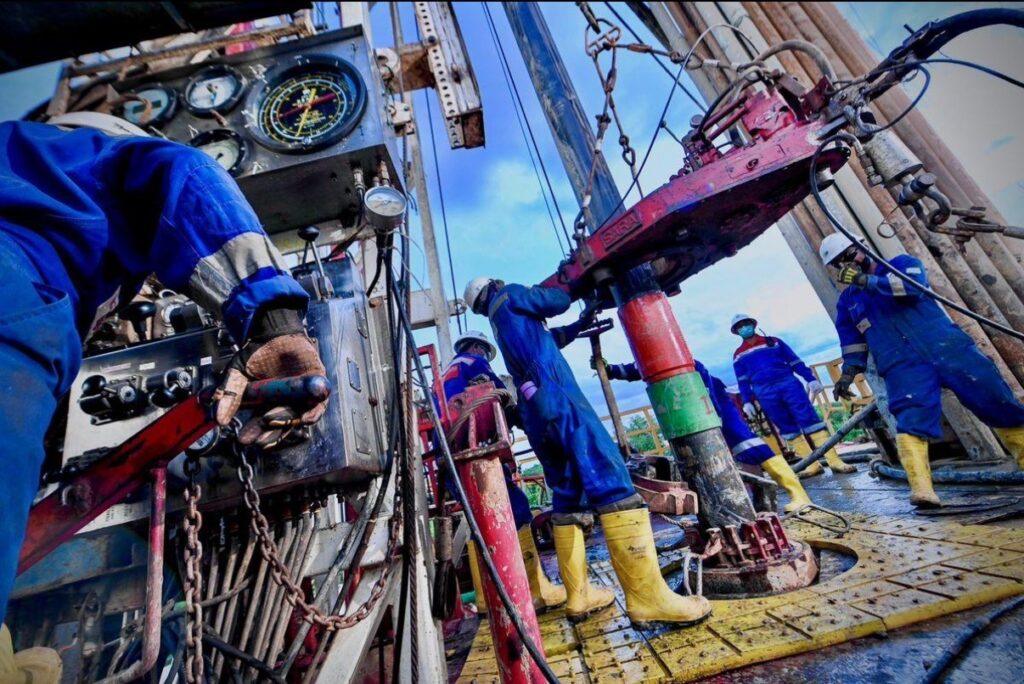
Water-based drilling fluids use water or brine as the continuous phase. Their performance depends on a balanced additive package for shale inhibition, filtration control, rheology and cuttings transport. The formulation must suit the formation, source-water chemistry and anticipated downhole conditions.Jinxiang Chemical supplies K-PAM, PHPA, CMC, PAC-LV/HV, xanthan gum, modified starch, sulfonated asphalt, polymer fluid loss additives, potassium chloride, lignite resin SPNH and sulfonated phenolic resin. We support grade selection and compatible formulation screening for shale formations, directional wells, offshore operations and temperature-specific applications.
Présentation de la solution
Water-based drilling fluids must balance shale inhibition, filtration control, cuttings transport and stable rheology. The following problems are addressed through formulation-specific product selection and laboratory evaluation.
Les grades, dosages et limites d’exploitation dépendent de la formulation complète. Demander la fiche technique applicable et confirmer la compatibilité par des essais en laboratoire.
Shale Hydration, Cuttings Dispersion and Wellbore Instability
Problème et causes possibles : Reactive shale can soften, swell or disperse after contact with the water phase. Typical signs include sticky cuttings, increased fines, bit balling, tight-hole conditions and rising torque or drag. Formation mineralogy, exposure time and the inhibition level of the complete mud system influence the response.Approche de résolution et sélection des produits : Evaluate potassium chloride and K-PAM for inhibition, and PHPA for cuttings encapsulation, using the actual formation and source water. Check shale recovery or dispersion results alongside mud rheology and filtration. The objective is to maintain cuttings integrity and a compatible inhibitive system; product selection should follow formation-specific testing.Excessive Fluid Loss and Poor Filter Cake Quality
Problème et causes possibles : High filtrate invasion can produce an unsuitable filter cake and contribute to formation damage or differential sticking. Review API and HTHP filtration results, cake thickness and texture, water chemistry and the solids distribution. Filtrate loss through a permeable formation and losses of whole mud are different mechanisms.Approche de résolution et sélection des produits : Screen PAC-LV/HV, CMC, modified starch and polymer fluid loss additives for the required filtration performance. Where appropriate, evaluate sulfonated asphalt, SPNH and sulfonated phenolic resin as part of the complete package. Compare results before and after aging instead of selecting an additive only by its product name.Insufficient Cuttings Transport and Solids Suspension
Problème et causes possibles : In directional and horizontal sections, poor carrying capacity can allow cuttings to accumulate, while excessive viscosity can increase circulation resistance. A mud with an acceptable funnel viscosity may still have unsuitable low-shear properties. Review low-speed rheometer readings, gel strengths, solids content and the well profile.Approche de résolution et sélection des produits : Xanthan gum can support low-shear viscosity and suspension in a compatible formulation. PAC-HV or an appropriate CMC grade may contribute viscosity where that function is required. Balance carrying capacity with manageable rheology and assess the complete fluid, including its density and solids loading.Salt, Calcium and Source-Water Contamination
Problème et causes possibles : Changes in salinity or hardness can alter polymer hydration, viscosity and filtration performance. Contamination may appear as a sudden rheology change, increased filtrate or inconsistent mixing response. Freshwater laboratory results do not establish performance in seawater, brine or hard water.Approche de résolution et sélection des produits : Provide source-water analysis, chloride concentration, calcium or hardness data and pH when requesting a grade. Compare suitable PAC, CMC, starch and polymer grades using the actual water and anticipated contamination. Confirm compatibility between inhibitors, viscosifiers and filtration additives rather than assuming one grade suits every water chemistry.Thermal Degradation and Unstable Rheology
Problème et causes possibles : Elevated temperature can change the effectiveness of polymers and filtration additives. Possible symptoms include viscosity loss, excessive gel development or worsening HTHP filtration after aging. Surface measurements alone may not represent the expected downhole exposure.Approche de résolution et sélection des produits : Evaluate suitable polymer fluid loss additives, lignite resin SPNH and sulfonated phenolic resin for the intended temperature and mud chemistry. Use hot-aging tests followed by rheology, gel and filtration measurements. Applicable temperature limits depend on the specific grade, exposure time and complete formulation.Solids Build-Up, High Viscosity and Rising Torque
Problème et causes possibles : Fine drilled solids and dispersed cuttings can raise viscosity, weaken fluid control and increase torque or drag. Adding more polymer without identifying the cause may further increase viscosity. Distinguish a carrying-capacity requirement from a problem caused by excessive solids or formation dispersion.Approche de résolution et sélection des produits : Review solids-control performance, solids loading and inhibition before adjusting the additive package. PHPA and inhibitive additives can support cuttings integrity where appropriate. For filtration control with limited additional viscosity, compare PAC-LV with suitable low-viscosity CMC or polymer grades in laboratory tests.Choosing PAC-LV, PAC-HV and a Compatible Additive Package
Problème et causes possibles : PAC-LV and PAC-HV both support filtration control, but their viscosity contributions differ. A formulation that already has adequate carrying capacity may need a different grade from one requiring both filtration and viscosity adjustment.Approche de résolution et sélection des produits : Share the existing mud composition, target rheology and filtration results. Select complementary functions across K-PAM, PHPA, PAC, CMC, xanthan gum, starch and resin additives, then verify compatibility as a package. Request grade-specific TDS and recommended laboratory screening guidance from Jinxiang Chemical.Contact Jinxiang Chemical en précisant la composition actuelle de la boue, les résultats d’essai, les conditions du puits et la quantité requise.| Nom du produit | Caractéristiques fonctionnelles | Domaines d’application |
|---|---|---|
| Polyacrylate de potassium (K-PAM) | Inhibition des schistes et encapsulation des déblais. | Boues inhibitrices à base d’eau. |
| Polyacrylamide partiellement hydrolysé (PHPA) | Encapsulation des déblais et maîtrise de leur dispersion. | Boues polymères à base d’eau. |
| Carboxyméthylcellulose (CMC) | Contrôle de la filtration ; l’effet sur la viscosité dépend de la qualité. | Gestion de la filtration et de la viscosité. |
| Cellulose polyanionique à faible ou haute viscosité (PAC-LV / PAC-HV) | Contrôle de la filtration avec un effet viscosifiant faible ou plus élevé. | Boues à base d’eau nécessitant une rhéologie adaptée à la qualité choisie. |
| Gomme xanthane | Viscosité à faible cisaillement et suspension des solides. | Transport des déblais dans les puits déviés et horizontaux. |
| Amidon modifié | Réduction de la filtration et formation du gâteau de filtration. | Systèmes compatibles dans les limites opératoires propres à la qualité. |
| Poudre d’asphalte sulfoné | Colmatage complémentaire et contrôle de la filtration. | Formulations sélectionnées à base d’eau. |
| Additif polymère de contrôle de la filtration | Contrôle de la filtration avec une tenue à la température et à la salinité propre à chaque qualité. | Conditions opératoires sélectionnées et validées par des essais. |
| Chlorure de potassium (KCl) | Inhibition de l’hydratation des argiles sensibles. | Systèmes de boues KCl-polymère. |
| Résine de lignite (SPNH) | Contrôle de la filtration dans les formulations adaptées aux températures élevées. | Systèmes validés par des essais de vieillissement thermique. |
| Résine phénolique sulfonée | Contrôle de la filtration à température élevée. | Fluides de forage compatibles à base d’eau. |
Foire aux questions
Can K-PAM and PHPA be used together?
They may provide complementary inhibition and encapsulation functions in a compatible water-based formulation. Suitability depends on the selected grades, formation behavior, salinity and the existing additive package. Evaluate the combination with the actual mud and cuttings rather than assuming a universal mixing ratio.How should I choose a filtration additive?
Compare the required filtration performance with viscosity contribution, source-water chemistry and temperature exposure. PAC-LV, PAC-HV, CMC, modified starch, polymers and resin additives serve different formulation needs. Review the TDS and laboratory results for the complete package, including aged-fluid results where relevant.What information is needed for product selection?
Provide the mud composition, water analysis, formation type, salinity, hardness, pH, density and expected temperature. Include available rheology, gel, filtration and shale-test results, the current problem and required quantity. This allows Jinxiang Chemical to identify suitable grades for your screening program.Assistance technique
Optimisation du système de boue
Optimiser les systèmes de fluides de forage selon les conditions géologiques pour améliorer la stabilité du puits et les performances de forage.
Essais en laboratoire
Évaluer la compatibilité du fluide de forage et les performances du produit par des essais en laboratoire avant l’application sur le terrain.
Sélection du produit
Recommander des additifs adaptés aux caractéristiques de la formation, à la température, à la salinité et aux exigences du forage.
Formulation sur mesure
Développer des formulations sur mesure pour les formations difficiles, les puits profonds et les environnements de forage particuliers.