
Oil-Based Drilling Fluid Technical Guide
Organophilic Bentonite for Oil-Based Mud: Building Rheology, Suspension and Field Stability
On an active drilling rig, oil-based mud must keep barite and drilled solids suspended, remain pumpable through the circulation system, and recover acceptable structure after connections or trips. Organophilic bentonite is one of the key additives used to create that balance.
Why Organophilic Bentonite Matters on the Rig
In a working oilfield, drilling fluid performance is judged by what happens when conditions change: circulation slows, temperature rises, weighting material is added, drilled solids enter the system, or the mud remains static during a connection. A well-designed oil-based mud must maintain enough low-shear structure to suspend barite and cuttings without becoming unnecessarily difficult to pump. This is where organophilic bentonite for oil-based mud becomes valuable.
Organophilic bentonite is a modified clay designed for non-aqueous drilling fluid systems. Unlike conventional sodium bentonite, which is naturally suited to water-based fluids, organophilic bentonite is surface-treated to improve dispersion and interaction in oil or synthetic continuous phases. The goal is not simply to increase viscosity. The goal is to build a controlled rheological network that supports suspension, hole cleaning and more stable mud behavior during changing field conditions.
Rheology Control
Supports yield point and low-shear structure so the fluid can carry solids while remaining workable in circulation.
Barite Suspension
Helps reduce settling risk when weighted mud remains static during connections, trips or other interruptions.
System Stability
Provides a more predictable rheological framework when used together with a compatible emulsifier package.
What Happens When Rheology Is Too Weak or Too Strong?
Weak low-shear rheology can allow barite or drilled solids to settle when circulation stops. That can create uneven density distribution and make mud conditioning more difficult. Excessive treatment can create the opposite problem: higher viscosity, greater hydraulic losses and more difficult pumping. For this reason, experienced mud engineers do not evaluate organophilic bentonite by asking whether it makes the fluid “thicker.” They evaluate whether it creates the right balance for the specific formulation and well conditions.
That balance depends on base oil type, oil-water ratio, mud density, weighting material, solids loading, emulsifier package, temperature and mixing energy. A product that performs well in one formulation may require a different dosage or grade in another. Buyers should therefore compare products under a test procedure that reflects the actual mud system rather than relying on a single generic specification.
Conventional vs. High-Temperature Organophilic Bentonite
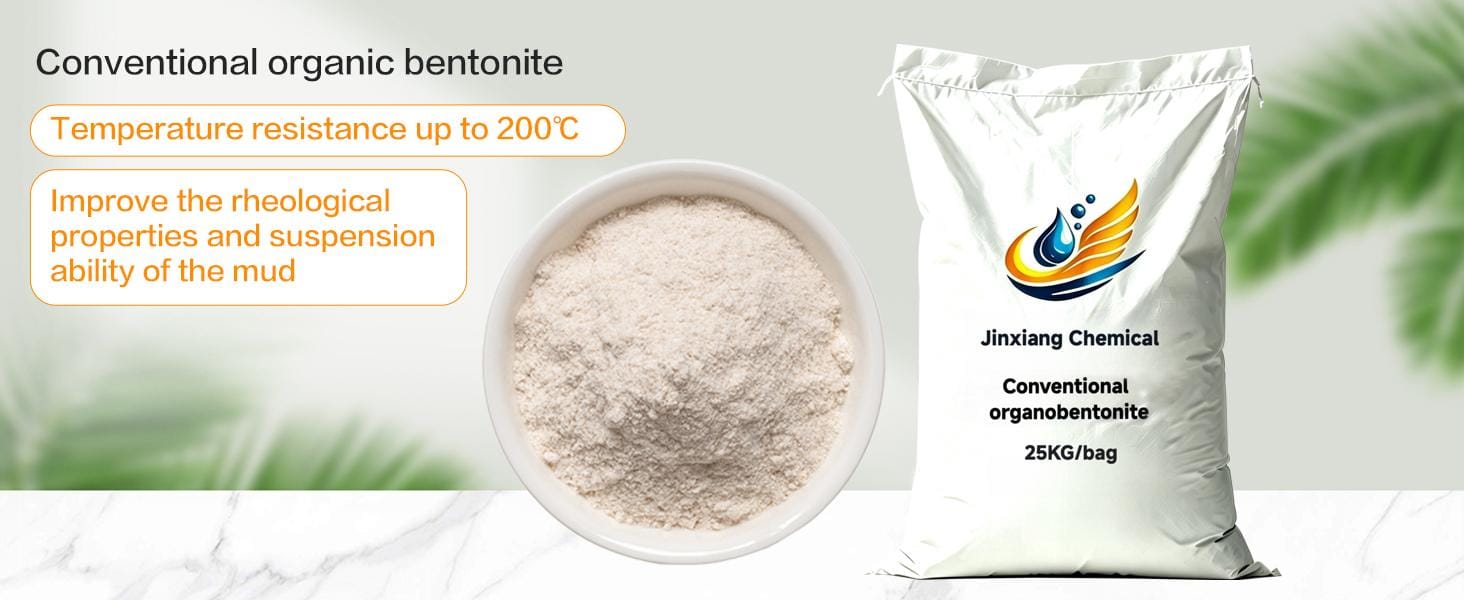
For standard oil-based drilling operations, a conventional grade may be suitable when temperature exposure and static-aging requirements are moderate. In deeper or hotter wells, however, the rheological structure created by a conventional product can weaken after prolonged thermal exposure. That is why buyers working on high-temperature or HPHT projects often evaluate a dedicated high-temperature grade in parallel with a conventional grade.
Jinxiang Chemical supplies Organic Bentonite for Drilling Fluids for conventional oil-based systems and High-Temperature Organic Bentonite for more demanding temperature conditions. The high-temperature product is positioned for oil-based and synthetic-based drilling fluids and is designed to maintain rheology and suspension under elevated-temperature service. Laboratory hot-aging tests should still be used to confirm fit for the actual well program.
How Organophilic Bentonite Works with Primary Emulsifier
Oil-based mud is a complete chemical system, not a collection of independent products. Organophilic bentonite and emulsifiers perform different jobs. Bentonite mainly supports rheology and suspension, while the primary emulsifier helps create and stabilize the water-in-oil emulsion. If the emulsion package is weak, oil-water separation or unstable electrical behavior may occur even when the mud has acceptable viscosity. If the rheological structure is weak, a strong emulsion package cannot fully prevent solids settling.
For this reason, many buyers evaluate both products together. See our Primary Emulsifier for Drilling Fluids page to understand the emulsification side of the system. For a broader overview of available drilling fluid chemistry, visit our Oil-Well Drilling Fluid Solutions page.
What Procurement Teams Should Include in an RFQ
A good RFQ helps the supplier recommend a more appropriate grade and reduces unnecessary sample rounds. Instead of asking only for “organophilic bentonite price,” provide the operating context. Useful information includes:
- Base oil or synthetic fluid type
- Target mud density and weighting material
- Oil-water ratio and brine condition
- Expected circulating and bottom-hole temperature
- Current emulsifier package and treatment level
- Observed problem, such as barite settling, weak gels or poor suspension after aging
- Required packaging, destination port and expected order volume
Recommended Laboratory Evaluation Before Bulk Purchase
Before changing supplier or placing a large international order, test the product in the planned mud formulation. Compare dispersibility, low-shear rheology, gel development, suspension behavior and hot-aged performance. The test should use the same base oil, brine, emulsifiers, weighting material and other major additives whenever possible. This allows the purchasing team to compare not just the price per ton, but the treatment efficiency and overall effect on the complete mud system.
Ask the supplier for an appropriate product sample together with TDS, MSDS and a recent batch COA. For technical procurement, documentation quality matters because it allows mud engineers, QA personnel and HSE teams to review the product before field introduction.
Why Buyers Look for a Reliable Organophilic Bentonite Supplier
In drilling fluid operations, batch consistency can be as important as headline performance. A lower-priced additive may become more expensive if field dosage must be increased or if every shipment requires major formulation adjustment. A reliable organophilic bentonite supplier should provide consistent product quality, clear technical documentation, responsive sample support and practical communication about the buyer’s mud system.
Puyang Jinxiang Chemical supplies drilling fluid additives for both water-based and oil-based systems. For buyers evaluating oil based drilling mud additives, we can support grade comparison, sample evaluation and export documentation for project discussions.
Frequently Asked Questions
Is organophilic bentonite the same as ordinary bentonite?
No. Ordinary bentonite is naturally suitable for water-based systems. Organophilic bentonite is modified to improve compatibility and dispersion in oil-based or synthetic-based fluids.
Should I always use more product to improve suspension?
No. Excess treatment can raise viscosity and increase hydraulic losses. The optimum dosage should be confirmed through formulation testing.
When should I consider a high-temperature grade?
When the well program includes deeper sections, higher temperature exposure or long static-aging periods, it is worth comparing a high-temperature grade in laboratory tests.
Need a Grade Recommendation for Your Oil-Based Mud?
Send us your base oil, oil-water ratio, mud density, temperature range and current additive package. Jinxiang Chemical can help you compare conventional and high-temperature organophilic bentonite and prepare a sample for laboratory evaluation.