POTASSIUM CHLORIDE (KCl)

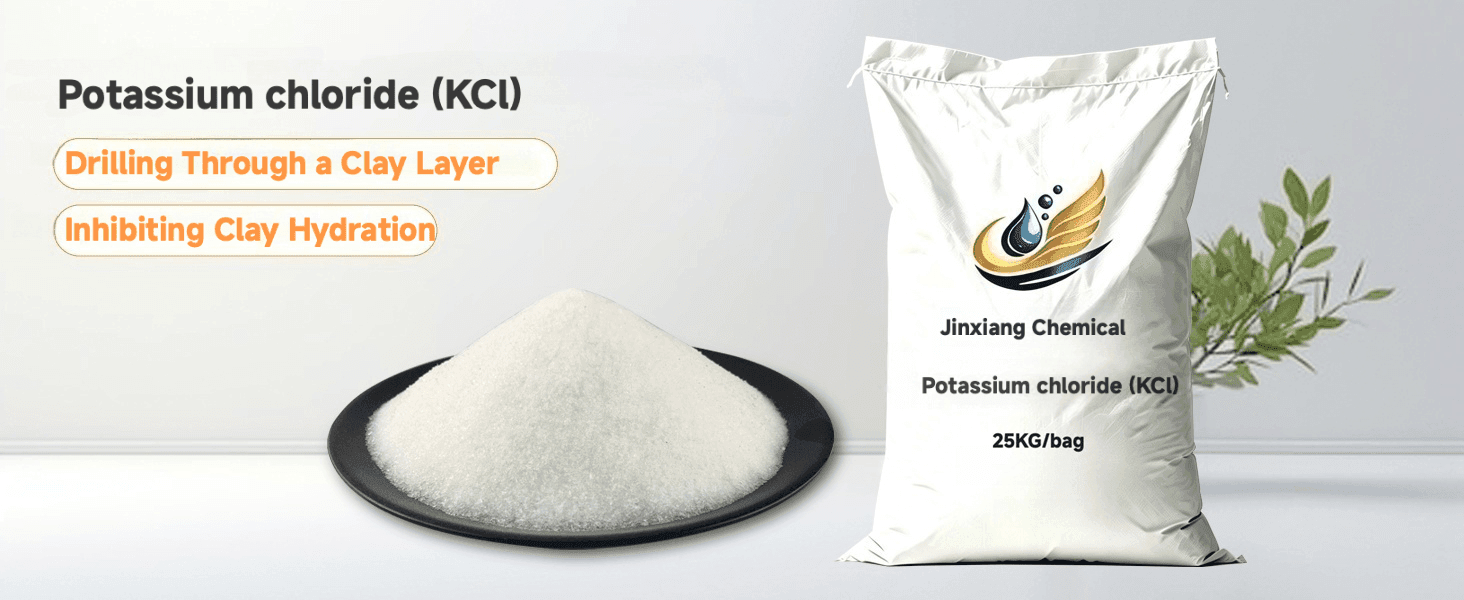
KClInorganic salt shale inhibitors; their primary function is to inhibit the hydration, swelling, and dispersion of water-sensitive shale and clay, thereby enhancing wellbore stability.

 Product Overview

The potassium ions released by KCl can effectively attenuate the interaction between reactive clays and water. During drilling operations in shale, mudstone, and other water-sensitive formations, it helps mitigate issues such as cuttings dispersion, borehole enlargement, and wellbore instability.

In practical drilling fluid formulations, KCl is frequently combined with PHPA, K-PAM, and polymer encapsulators to create a KCl/Polymer water-based drilling fluid system that offers excellent inhibition and wellbore stability.


Key Performance Characteristics

  • Powerful Shale Inhibition

Effectively inhibits the hydration, swelling, and dispersion of water-sensitive shales and clays.

  • Enhanced Wellbore Stability

Helps reduce the risk of wellbore instability, sloughing, and hole enlargement caused by formation hydration.

  • Reduced Drill Cuttings Dispersion

Maintains the integrity of drill cuttings and minimizes the entry of reactive solids into the drilling fluid system.

  • Ease of Formulation

Features good water solubility; suitable for the formulation and maintenance of inhibitive water-based drilling fluid systems, such as   KCl/Polymer systems.


Key Applications

  • 水基钻井液系统
  • Inhibitive drilling fluid systems
  • Water-sensitive shale and mudstone formations
  • Controlling shale hydration and swelling
  • 定向井和水平井
  • 油气井钻探

Key Drilling Issues Addressed

Consider using a KCl inhibition system when the following situations arise during drilling:

Shale swelling upon contact with water
→ KCl inhibits clay hydration.

Drill cuttings prone to dispersion and becoming sludge-like
→ Reduces the dispersion of reactive clays and drill cuttings.

Wellbore instability in water-sensitive formations
→ Helps improve wellbore stability.

Increased solids contamination in the drilling fluid
→ Reduces excessive shale dispersion into the drilling fluid.


Packaging and storage

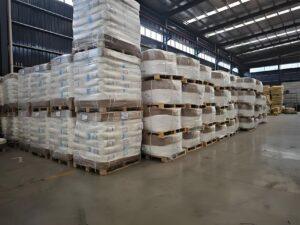
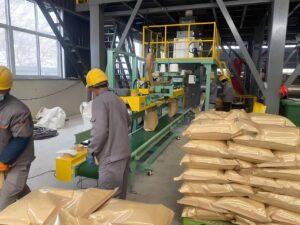
Standard packaging: 25 kg/bag

Customized packaging can be provided according to export markets and customer requirements.

The product should be stored in a cool, dry and ventilated environment, the packaging should be kept sealed, and moisture-proof should be paid attention to during transportation and storage.


技术服务

  • Product selection recommendations
  • Sample testing
  • Drilling fluid compatibility testing
  • Shale inhibition and wellbore stability solutions
  • Optimized dosage recommendations
  • Water-based drilling fluid formulation advice

FAQ – Potassium Chloride (KCl)

  • What is the primary function of Potassium Chloride (KCl) in drilling fluids?

KCl is primarily used as a shale inhibitor and clay hydration inhibitor. It helps suppress the hydration, swelling, and dispersion of water-sensitive shales and clays, thereby improving wellbore stability and reducing the tendency of drill cuttings to become sticky or “ball up.

  • In which drilling fluid systems is KCl primarily used?

It is mainly used in water-based mud (WBM) systems, particularly in inhibitive systems such as KCl/Polymer and KCl/PHPA.

  • How does KCl inhibit shale swelling?

Upon dissolution, KCl releases potassium ions, which help reduce the hydration and dispersion of water-sensitive clays, thereby enhancing formation stability.

  • Can KCl be used with PHPA?

Yes. KCl and PHPA are commonly used in combination. KCl provides inorganic inhibition, while PHPA offers polymer encapsulation; together, they help improve cuttings integrity and wellbore stability.

  • Can KCl be used with K-PAM?

Yes. KCl can be used in conjunction with water-based mud additives such as K-PAM, PHPA, PAC, and CMC, depending on formulation requirements.

  • For which formations is KCl suitable?

It is particularly suitable for drilling operations involving water-sensitive shale, mudstone, and active clay formations, helping to mitigate wellbore stability issues caused by formation hydration.

  • What is the recommended dosage for KCl?

The actual dosage should be determined based on formation reactivity, the drilling fluid system, salinity, and on-site performance requirements. It is recommended to determine the optimal concentration through laboratory testing rather than committing to a fixed dosage on the product page.

  • What are the packaging specifications for KCl?

Standard packaging is 25 kg per bag; customized packaging is also available to meet export market and customer requirements.

  • Can you provide the COA, TDS, and MSDS for KCl?

Yes, we can provide the relevant COA, TDS, MSDS, and other technical documentation. Specific technical specifications are subject to the actual product supplied and the test results of the specific batch.

  • Is KCl suitable for oil and gas drilling?

Yes. Drilling-grade KCl can be used in water-based drilling fluid systems for oil and gas wells, primarily for shale inhibition, control of clay hydration, and wellbore stability.