Présentation du produit
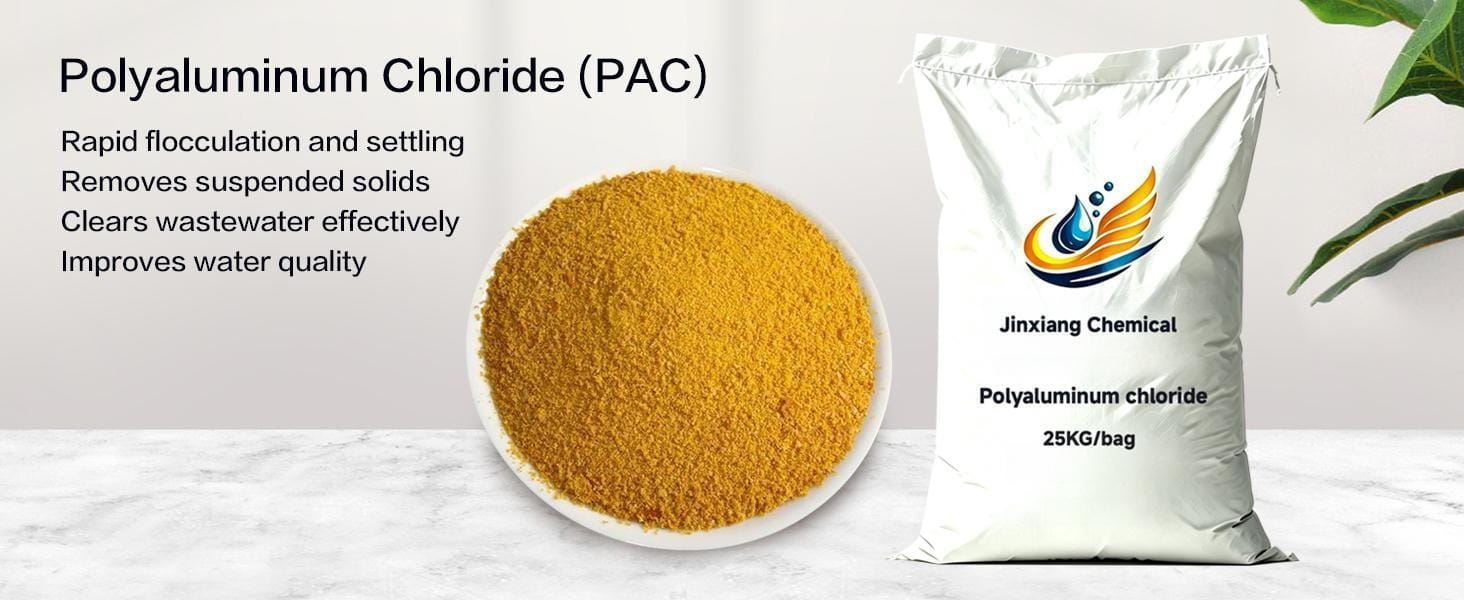
Polychlorure d’aluminium (PAC)
est principalement utilisé pour éliminer les matières en suspension, les particules colloïdales, la couleur et certains polluants organiques de l’eau.
Lorsqu'il est ajouté à l'eau, le PAC s'hydrolyse rapidement pour former des polymères d'hydroxyaluminium dotés de fortes capacités de neutralisation de charge et d'adsorption. Grâce à des mécanismes tels que la neutralisation des charges, le pontage par adsorption et la floculation par balayage, il déstabilise les particules finement dispersées et les agrège en flocs plus grands, améliorant ainsi l'efficacité de la sédimentation, de la flottation à air dissous (DAF) et des processus ultérieurs de séparation solide-liquide.
Par rapport aux coagulants traditionnels à base d'aluminium, le PAC offre des avantages tels qu'une formation rapide de flocs, d'excellentes caractéristiques de décantation, une large applicabilité sur diverses qualités d'eau et une facilité d'utilisation. Il est largement utilisé dans le traitement des eaux usées industrielles, le traitement des eaux usées municipales et les systèmes de traitement de l'eau dans des secteurs tels que l'exploitation minière (traitement des minéraux), le lavage du charbon, la fabrication du papier et l'impression et la teinture textiles.
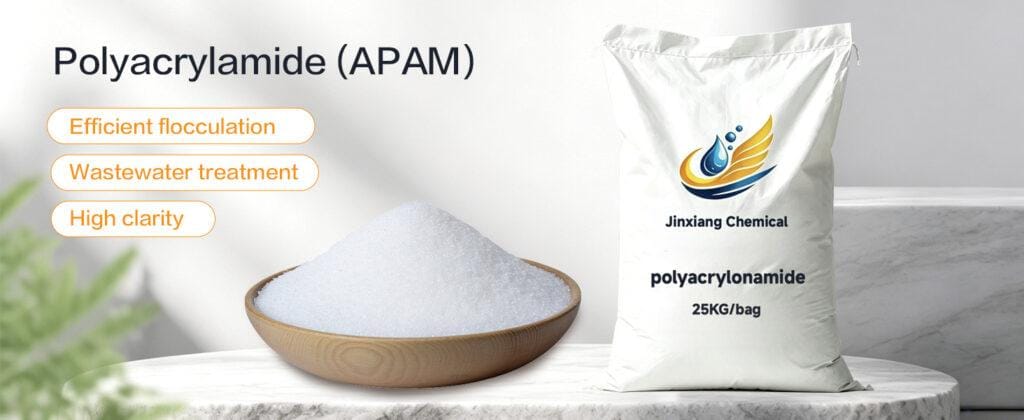
En fonction des conditions spécifiques de l'eau brute et des eaux usées, des Jar Tests peuvent être effectués pour déterminer la qualité optimale de PAC, le dosage et la stratégie d'application combinée avec le polyacrylamide (PAM), garantissant des performances de traitement stables et une utilisation rentable des produits chimiques.
Caractéristiques du produit
- Coagulation rapide
- Réduit efficacement la turbidité de l'eau
- Aide à éliminer les matières en suspension et les particules colloïdales
- S'adapte à diverses conditions d'eaux usées industrielles
- Peut être utilisé conjointement avec PAM
- Convient à divers processus de traitement, tels que la sédimentation et la flottation à air dissous (DAF)
- Recommandations de sélection de produits disponibles en fonction de la qualité de l'eau spécifique
Domaines d'application clés
Traitement des eaux usées industrielles
- Utilisé pour la coagulation-sédimentation et la séparation solide-liquide dans les eaux usées industrielles, telles que celles provenant du traitement chimique.
Eaux usées des mines et du traitement des minéraux
- Facilite l’agrégation rapide des fines particules minérales, améliorant ainsi l’efficacité de la sédimentation et de la clarification.
Eaux usées de lavage du charbon
- Utilisé pour traiter l'eau de boue de charbon afin d'améliorer l'efficacité de décantation des particules de boue de charbon en suspension ; souvent utilisé en conjonction avec l'APAM.
Eaux usées des pâtes et papiers
- Utilisé pour réduire les matières en suspension et la turbidité, et pour faciliter les processus ultérieurs de traitement biochimique ou des boues.
Eaux usées d’impression et de teinture textiles
- Utilisé pour l'élimination de la coagulation et de la turbidité, ainsi que pour aider à réduire la charge de couleur et de pollution.
Traitement des eaux usées municipales
- Applicable aux processus tels que la coagulation-sédimentation et l'élimination améliorée du phosphore ; Les qualités de produits et les taux de dosage spécifiques doivent être déterminés sur la base d’analyses de la qualité de l’eau.
Emballage
- Sacs tissés de 25 kg ou sacs composites en papier kraft
- Emballage OEM disponible
- Marquage et étiquetage personnalisés pris en charge
- Conserver dans un endroit frais, sec et bien ventilé ; empêcher l’absorption d’humidité et les dommages à l’emballage.
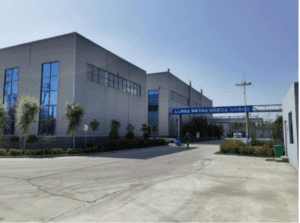
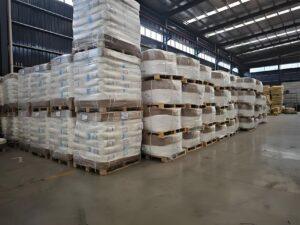
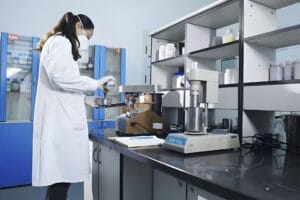
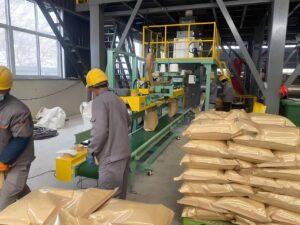
Vue de l’usine
Questions fréquentes
1. Quelle est la fonction principale du chlorure de polyaluminium (PAC) ?
Le PAC est un coagulant polymère inorganique largement utilisé. Il est principalement utilisé pour éliminer les matières en suspension, les particules colloïdales, la turbidité et certaines substances organiques de l’eau. Il favorise la formation de flocs d'impuretés, leur permettant de se déposer et améliorant ainsi la qualité de l'eau.
2. Dans quels secteurs du traitement de l’eau le PAC est-il principalement utilisé ?
Le PAC est utilisé dans le traitement des eaux usées industrielles, des eaux usées municipales, des eaux usées de teinture textile, des eaux usées de fabrication du papier, des eaux usées minières et d'autres applications d'eau industrielle. La qualité appropriée doit être sélectionnée en fonction de la qualité spécifique de l’eau et des exigences d’application.
3. Quelle est la teneur en Al₂O₃ du PAC ?
Nous proposons des qualités PAC avec une teneur en Al₂O₃ allant d'environ 26 % à 30 %. Des spécifications spécifiques peuvent être sélectionnées en fonction des exigences du client en matière de qualité de l’eau, d’application et de traitement.
4. Comment fonctionne le PAC ?
Lorsqu'il est ajouté à l'eau, le PAC déstabilise les fines matières en suspension et les colloïdes grâce à des mécanismes tels que la neutralisation des charges, le pontage par adsorption, la compression de la double couche électrique et la floculation par balayage. Cela provoque l’agrégation des particules en flocs plus gros, facilitant ainsi la sédimentation ou la filtration ultérieure.
5. Quelle est la différence entre le PAC et le polyacrylamide (PAM) ?
Le PAC est avant tout un coagulant utilisé pour déstabiliser les colloïdes et les particules fines. Le PAM agit généralement comme un floculant, utilisant un pontage polymère pour favoriser l'agrégation de petits flocs en amas de flocs plus grands. Les deux sont souvent utilisés en combinaison dans les projets de traitement de l’eau.
6. Le PAC peut-il être utilisé avec l'APAM ?
Oui. Un processus courant consiste à ajouter d'abord du PAC pour la coagulation, suivi de l'ajout d'un APAM approprié (basé sur la qualité de l'eau) pour la floculation afin de former des flocs plus gros et plus faciles à décanter. La séquence de dosage et la posologie spécifiques doivent être déterminées par des tests effectués au laboratoire de Jinxiang.
7. Une teneur plus élevée en Al₂O₃ garantit-elle nécessairement de meilleurs résultats de traitement ?
Pas nécessairement. Bien que la teneur en Al₂O₃ soit un indicateur clé, les performances réelles du traitement dépendent également de facteurs tels que la basicité, la teneur en eau insoluble, le pH de l'eau brute, la turbidité, la température et la composition des polluants. Par conséquent, les performances du produit ne peuvent pas être jugées uniquement par la teneur en Al₂O₃.
8. Comment dois-je choisir entre 26 %, 28 % et 30 % de PAC ?
Différents niveaux de contenu correspondent à différentes qualités de produits et exigences d'application. Pour les eaux usées industrielles, la qualité appropriée de PAC peut être sélectionnée en fonction du coût et des performances de traitement ; pour les projets nécessitant un contrôle plus strict de la qualité de l'eau, de la solubilité et des impuretés, la sélection doit être basée sur un ensemble complet de spécifications techniques plutôt que sur la seule teneur en Al₂O₃.
9. Le PAC peut-il traiter les eaux usées à haute turbidité ?
Oui. Le PAC est efficace pour coaguler l’eau contenant des niveaux élevés de matières en suspension et de colloïdes ; cependant, pour les projets impliquant une turbidité élevée ou des fluctuations importantes de la qualité de l'eau, des tests en jarre doivent être effectués pour déterminer la qualité et le dosage optimaux de PAC.
10. Le PAC peut-il être utilisé pour les eaux usées d’impression et de teinture de textiles ?
Oui. Le PAC peut être utilisé pour la coagulation, l’élimination des matières en suspension et la réduction partielle de la couleur dans les eaux usées d’impression et de teinture ; il peut également être utilisé en conjonction avec des floculants comme le PAM, en fonction de la qualité spécifique de l'eau.
11. Le PAC peut-il être utilisé pour les eaux usées minières ?
Oui. Le PAC peut être utilisé pour la coagulation et la séparation solide-liquide dans des systèmes tels que le drainage minier et l’eau de lavage des minerais, aidant ainsi à éliminer les fines particules en suspension. Des plans de traitement spécifiques doivent être déterminés en fonction du type de minéraux et de l’analyse de la qualité de l’eau.
12. Quelle est la posologie recommandée pour le PAC ?
Il n’existe pas de dose unique et fixe. L'utilisation réelle dépend de facteurs tels que la turbidité de l'eau brute, le pH, la concentration de matières en suspension, la composition des polluants et la qualité de l'effluent cible ; il est recommandé d'effectuer un test de pot pour déterminer le dosage optimal.
13. Un ajustement du pH est-il nécessaire lors de l’utilisation du PAC ?
Cela dépend des conditions de l'eau brute. Les performances de coagulation du PAC sont influencées par le pH et l’alcalinité ; par conséquent, pour certains types d’eaux usées, des expériences sont nécessaires pour déterminer la plage de pH et les conditions de dosage optimales.
14. Le PAC doit-il être dosé directement ou préparé d’abord sous forme de solution ?
Dans les applications pratiques, en fonction de l'équipement de dosage et des exigences du processus, le PAC solide peut être préparé dans une solution d'une concentration spécifique, puis dosé dans le système. Les concentrations de préparation spécifiques et les procédures opérationnelles doivent être déterminées en fonction de l'équipement sur site et des spécifications du produit.
15. Quelles sont les spécifications d’emballage des PAC ?
L'emballage standard est de 25 kg par sac ; des emballages personnalisés sont également disponibles pour répondre aux besoins des clients et aux exigences d’exportation/expédition.
16. Pouvez-vous fournir le COA, le TDS et le MSDS pour le PAC ?
Oui, le COA, le TDS et la MSDS peuvent être fournis. Les paramètres techniques spécifiques, tels que la teneur en Al₂O₃, la basicité, le pH et les matières insolubles dans l'eau, sont soumis à la qualité réelle du produit et aux résultats des tests du lot correspondant.
17. Comment un client doit-il déterminer le type de PAC à utiliser ?
Il est conseillé aux clients de fournir des informations concernant l'industrie d'application, le type d'eau brute, le pH, la turbidité, la teneur en matières en suspension, les produits chimiques actuellement utilisés et les objectifs de traitement. Pour les projets à grande échelle, il est recommandé d'effectuer d'abord des tests sur échantillons, puis de déterminer la qualité du produit final en fonction de la vitesse de coagulation, des caractéristiques du flocage, des performances de décantation, de la qualité du surnageant et du coût unitaire de traitement.
-1024x420.png "Polyacrylamide cationique (CPAM)")