
Cationic Polyacrylamide (CPAM) for Sludge Dewatering
Product Introduction
Sludge dewatering efficiency directly impacts the operating costs of wastewater treatment plants and subsequent disposal expenses. Selecting the appropriate flocculant not only improves dewatering efficiency but also reduces chemical consumption and sludge transportation costs.
Cationic polyacrylamide (CPAM) is primarily used for sludge dewatering, municipal wastewater treatment, and industrial wastewater treatment. Through charge neutralization and adsorption bridging, the product enables sludge particles to rapidly form compact flocs, significantly improving dewatering efficiency in filter presses, centrifuges, and belt dewatering machines.
This product is available in a range of cationic degrees from 30% to 80%. The appropriate grade can be selected based on the specific properties of the sludge, and it is widely used in municipal wastewater treatment plants, as well as in the food processing, papermaking, printing and dyeing, pharmaceutical, and chemical industries.
Product Features
- Excellent sludge dewatering performance
- Rapid floc formation
- Reduced filter cake moisture content
- Improved processing efficiency of dewatering equipment
- Lower chemical costs
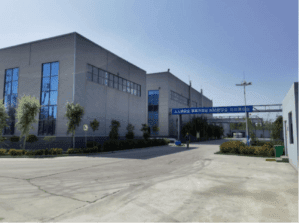
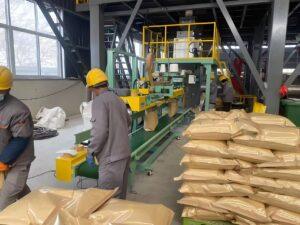
- Manufactured in-house with consistent product quality
Packaging and Storage
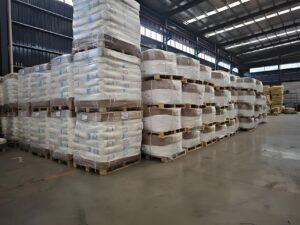
- 25 kg kraft paper composite bags, lined with PE moisture-proof bags.
Technical Services
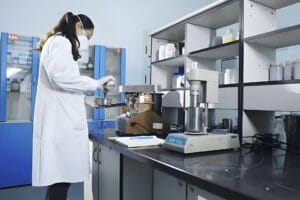
- Free sample testing
- Water sample analysis and product selection
- Guidance on usage concentrations and dosing plans
- Model recommendations and online technical support
FAQ
1. What is the primary function of Cationic Polyacrylamide (CPAM)?
CPAM is a positively charged, water-soluble high-molecular-weight polymer. It is primarily used for flocculation, sludge dewatering, solid-liquid separation, and sludge thickening, and is widely applied in municipal sewage and various industrial wastewater treatment processes.
2. In which water treatment processes is CPAM most commonly used?
CPAM is particularly suitable for sludge dewatering and can be used with equipment such as belt filter presses, plate-and-frame filter presses, and centrifuges. It can also be used for wastewater flocculation and solid-liquid separation, depending on water quality.
3. What is the cationic degree of CPAM?
Our standard CPAM products are available in various grades with cationic degrees ranging from approximately 30% to 80%. The appropriate grade can be selected based on sludge characteristics, water quality, and the dewatering equipment used.
4. Does a higher cationic degree always yield better results?
Not necessarily. The cationic degree must match the surface charge of the sludge and suspended particles. Excessively high or low degrees can impair flocculation performance; therefore, we recommend conducting experiments to determine the optimal cationic degree.
5. What is the difference between CPAM and APAM?
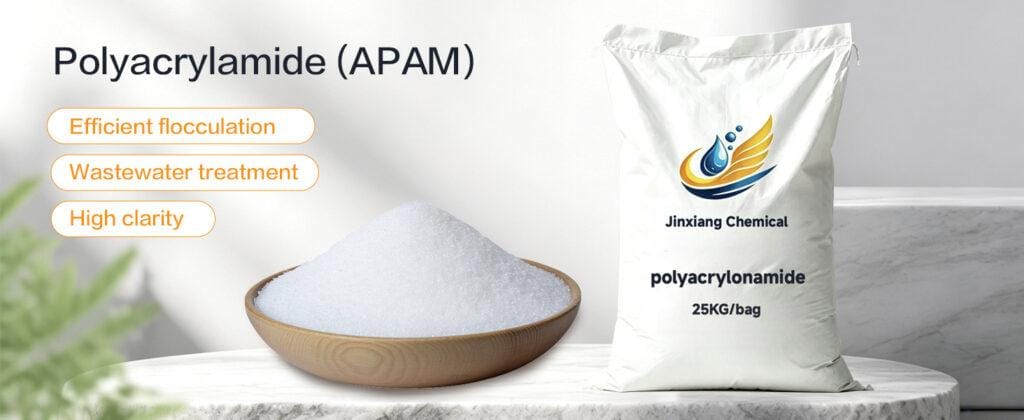
CPAM carries a positive charge and is generally better suited for sludge dewatering and certain types of organic wastewater. APAM carries a negative charge and is commonly used for treating inorganic suspended solids, mining applications, sedimentation processes, and certain industrial wastewaters. Specific product selection should be determined through water sample testing.
6. What is the difference between CPAM and NPAM?
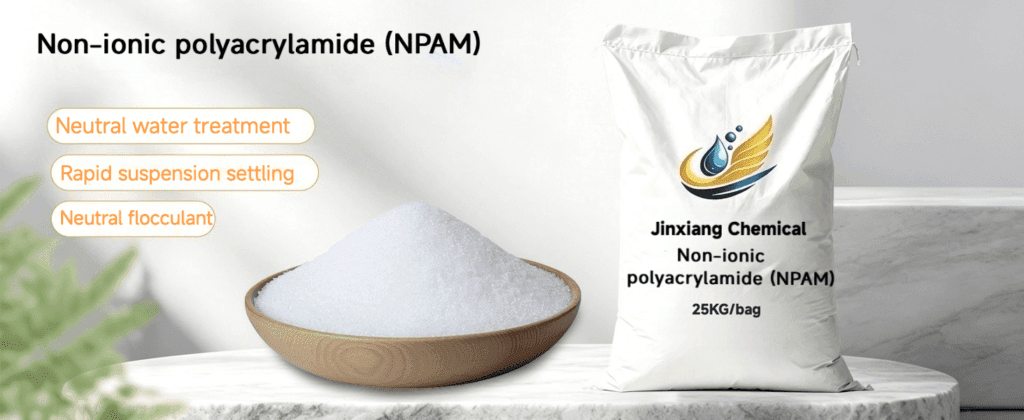
CPAM exhibits distinct cationic characteristics, whereas NPAM has low ionic character. Their performance varies depending on the specific sludge, wastewater, or suspended particle system.
7. Why is CPAM suitable for sludge dewatering?
CPAM promotes the formation of larger, more stable flocs from fine sludge particles through charge neutralization and polymer bridging. This improves sludge-water separation and enhances mechanical dewatering efficiency.
8. Can CPAM be used for municipal sewage treatment?
Yes. CPAM is frequently used for excess sludge thickening and mechanical dewatering in municipal sewage treatment plants. The specific grade should be selected based on sludge characteristics and equipment specifications.
9. Can CPAM be used for industrial wastewater?
Yes. Depending on actual water quality, CPAM can be used for flocculation and sludge dewatering in industries such as papermaking, textile printing and dyeing, chemical manufacturing, food processing, and other industrial wastewater treatment.
10. Can CPAM be used with PAC (Polyaluminium Chloride)?
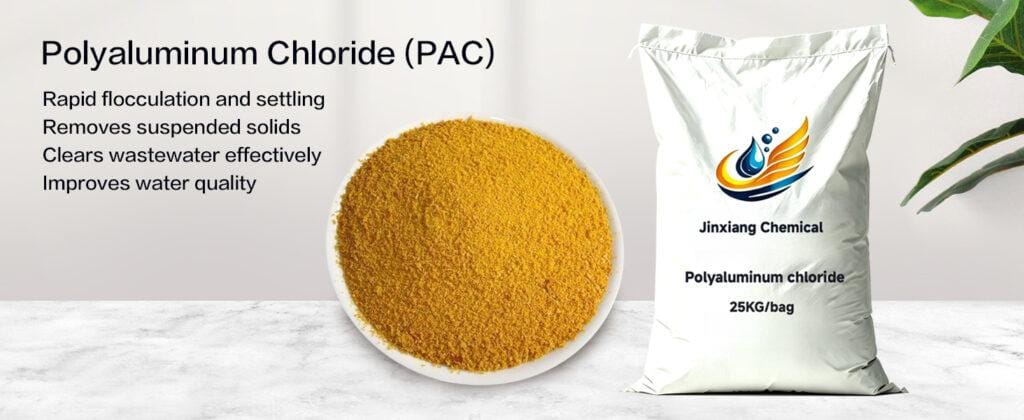
Yes. In some wastewater treatment applications, PAC can be used first for coagulation, followed by CPAM to enhance flocculation and solid-liquid separation. However, the optimal dosing sequence and dosage must be determined through jar testing.
11. How should the molecular weight of CPAM be selected?
A higher molecular weight is not necessarily better; selection requires a comprehensive assessment of sludge properties, solids content, target floc strength, dewatering equipment, and the treatment process. For sludge dewatering, the degree of cationicity must also be considered.
12. How should CPAM be dissolved?
It is recommended to add CPAM slowly and evenly into clean water while stirring continuously to prevent rapid agglomeration or clumping. Allow the polymer to fully dissolve and mature before use.
13. What is the recommended dosage for CPAM?
There is no fixed dosage applicable to all wastewater and sludge types. The actual dosage depends on factors such as sludge type, solids content, organic matter, pH, equipment type, and target moisture content; laboratory testing is recommended.
14. How can the flocculation performance of CPAM be evaluated?
Key indicators include floc size, floc strength, settling rate, supernatant clarity, filtration speed, and the moisture content of the dewatered sludge cake. Additionally, the actual chemical consumption for different grades should be compared.
15. What are the packaging specifications for CPAM?
Standard packaging is 25 kg per bag; customized packaging is available based on export shipping requirements and customer needs.
16. Can COA, TDS, and MSDS documents be provided for CPAM?
Yes, COA, TDS, and MSDS documents can be provided. Specifications such as cationicity, molecular weight, solids content, residual monomer levels, and dissolution time are based on the specific product grade and the test results of the corresponding batch.
17. How do I select the most suitable CPAM grade?
We recommend that users provide information regarding the wastewater source, sludge type, pH, sludge solids content, currently used chemicals, and the type of dewatering equipment. For new projects, it is best to conduct sample testing first and then determine the final product grade based on the characteristics of the flocs, supernatant, and sludge cake, as well as the specific chemical dosage required.
18. Can you recommend a CPAM product based on a customer’s sludge sample?
Yes. For sludge dewatering projects, the Jinxiang team conducts comparative tests using CPAM products with varying degrees of cationicity and molecular weights to select the product that offers the best balance of dewatering performance and chemical cost.
Factory scene