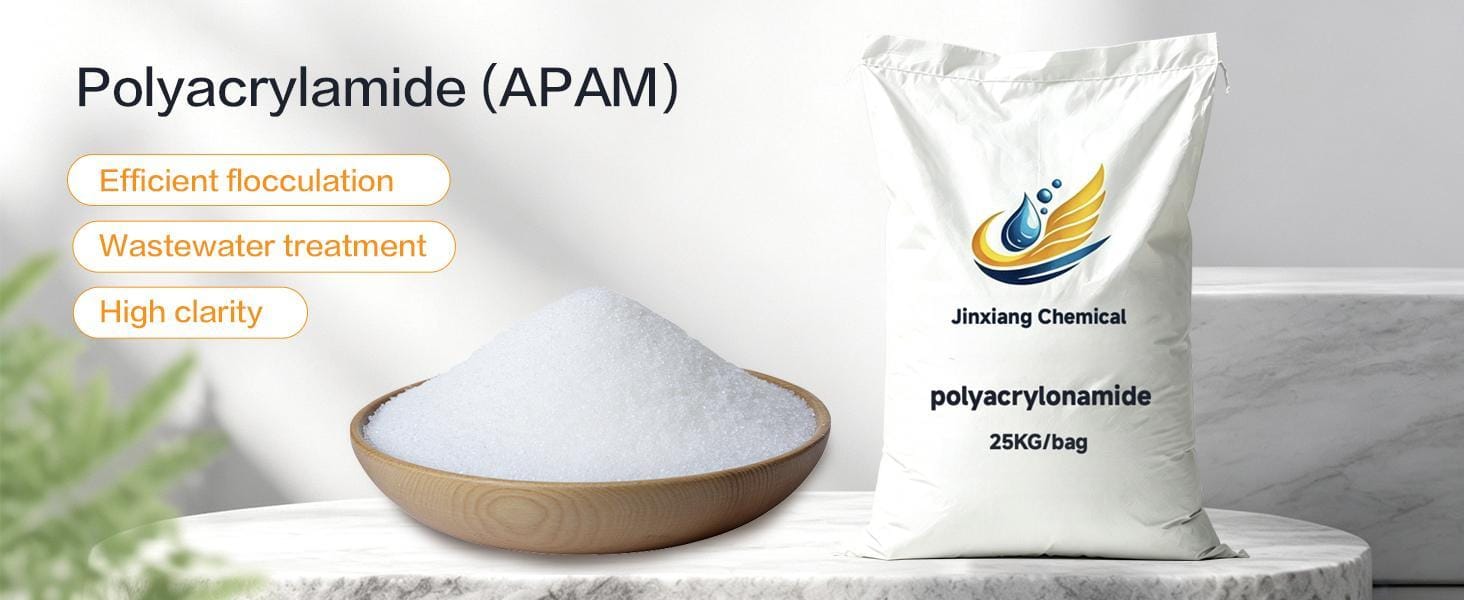
Product Introduction
Anionic polyacrylamide (APAM) offers excellent flocculation, sedimentation, thickening, and filtration-aid properties. It is widely used in industries such as industrial and municipal wastewater treatment, mineral processing, coal washing, papermaking, textile printing and dyeing, and oil extraction.
This product features a molecular weight range of 12 million to 24 million, with various specifications available to meet specific water quality and process requirements. APAM is characterized by rapid dissolution, low dosage requirements, and high treatment efficiency; it quickly forms large, dense flocs, thereby enhancing solid-liquid separation and reducing operating costs. It is a highly effective flocculant commonly used in modern water treatment processes.
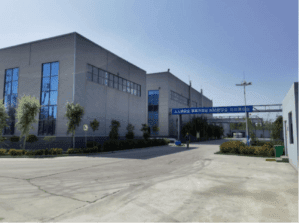
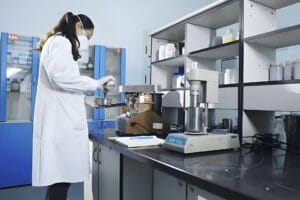
Jinxiang Chemical employs mature polymerization techniques and a rigorous quality control system to ensure consistent product quality, meeting the application needs of customers across various countries and industries.
Product Features
- High molecular weight provides excellent flocculation performance
- Rapidly forms large flocs
- Improves settling rate and dewatering efficiency
- Low dosage and high cost-effectiveness
- Stable performance and strong adaptability
- Custom molecular weight products available
Application Areas
- Industrial Wastewater Treatment
- Textile and Dyeing Wastewater Treatment
- Pulp and Paper Wastewater Treatment
- River Sludge Treatment
- Oil Extraction and Oilfield Additives
Product Advantages
- Over 20 years of manufacturing experience
- Stable and reliable product quality
- OEM customization services available
- Technical support for model selection
- Direct factory supply with highly competitive pricing
- Product model recommendations based on specific water quality
- Global export supported
Packaging and Storage
Packaging:
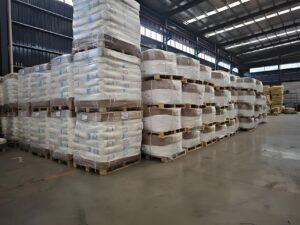
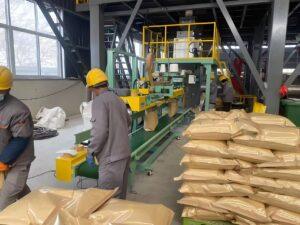
- 25-kilogram kraft paper composite bags (customizable)
- OEM packaging services available
Storage:
- Store in a cool, dry, and well-ventilated area; avoid direct sunlight and moisture. Reseal the product promptly after opening to maintain optimal performance.
FAQ
1. What is the primary function of Anionic Polyacrylamide (APAM)?
APAM is a water-soluble high-molecular-weight polymer primarily used for flocculation, sedimentation, solid-liquid separation, sludge thickening, and the treatment of suspended particles. It is widely applied in sectors such as industrial wastewater treatment, mining, and papermaking.
2. What is the molecular weight of APAM?
Our APAM is available with molecular weights ranging from approximately 12 million to 24 million; specific grades can be selected based on the customer’s water quality and application conditions.
3. What is the difference between APAM and CPAM?
APAM carries an anionic charge, whereas CPAM carries a cationic charge. They are suitable for different types of wastewater, sludge, and suspended particles; the choice should be based on actual water sample testing.
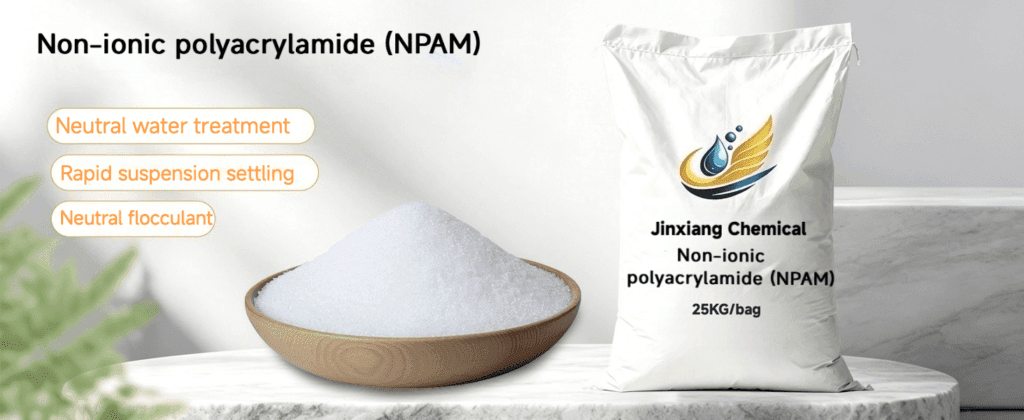
4. What is the difference between APAM and NPAM?
APAM exhibits distinct anionic characteristics, while NPAM has low ionicity. Flocculation performance can vary significantly between the two depending on the specific mineral slurry, industrial wastewater, or suspended particles involved.
5. Can APAM be used for industrial wastewater treatment?
Yes. APAM is commonly used for the flocculation, sedimentation, and solid-liquid separation of suspended solids in industrial wastewater; it promotes the aggregation of fine particles into larger flocs, thereby improving sedimentation efficiency.
6. Can APAM be used in mining and mineral processing?
Yes. APAM is used in processes such as mineral slurry sedimentation, tailings thickening, wash-water treatment, and solid-liquid separation. The specific grade should be selected based on mineral properties and slurry conditions.
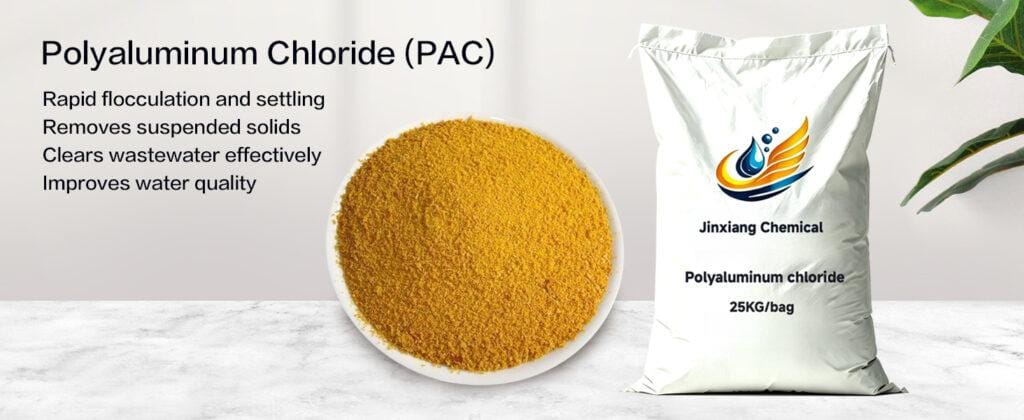
7. Can APAM be used in conjunction with Polyaluminum Chloride (PAC)?
Yes. In many water treatment processes, PAC (Polyaluminum Chloride) is used first for coagulation, followed by APAM for flocculation, to facilitate the formation of larger flocs from micro-particles. However, the specific dosing sequence and dosage should be determined through jar testing.
8. Does a higher molecular weight mean better flocculation performance?
Not necessarily. Molecular weight is just one important factor in product selection; other variables—such as water quality, particle properties, ionicity, water temperature, pH, and the treatment process—must also be considered. A higher molecular weight is not always the most suitable choice.
9. How should APAM be dissolved?
It is recommended to add APAM to water slowly and evenly while stirring continuously to prevent clumping caused by adding a large amount at once. Allow the product to fully dissolve and mature before dosing.
10. What is the dissolution time for APAM?
The current product can be specified with a dissolution time of ≤60 minutes. Actual dissolution speed is influenced by factors such as water temperature, stirring speed, solution concentration, and product grade.
11. What is the recommended dosage for APAM?
There is no fixed standard dosage. The optimal dosage depends on the wastewater type, suspended solids concentration, pH, salinity, and target treatment results; conducting a jar test is recommended to determine the best product grade and dosage.
12. What is the solid content of APAM?
The current APAM product can be marketed with a solid content of ≥90%; however, official supply specifications and test results are subject to the specific product specifications and the Certificate of Analysis (COA) for the relevant batch.
13. What is the residual acrylamide level in APAM?
The current product is available in a grade with residual acrylamide ≤0.05%. Official product pages and technical documents should refer to the actual testing methods and batch-specific COA.
14. What is the applicable pH range for APAM?
Current product documentation specifies a pH range of 6–12. Actual performance should be verified based on specific water quality conditions.
15. What are the packaging specifications for APAM?
Standard packaging is 25 kg/bag; customized packaging is also available to meet customer needs and export/shipping requirements.
16. Can you provide the COA, TDS, and MSDS for APAM?
Yes, COA, TDS, and MSDS can be provided. Specific data—such as molecular weight, solid content, residual monomer levels, and dissolution time—are subject to the actual product grade supplied and the test results for the specific batch.
17. How do I select the right APAM grade?
We recommend that customers provide details regarding the industry, raw water/wastewater type, pH, suspended solids concentration, currently used chemicals, and treatment objectives. For critical projects, we suggest conducting a jar test with samples to determine the final grade based on factors such as floc size, settling speed, supernatant quality, and actual dosage.
Factory scene