Non-Fluorescent Anti-Collapse Lubricant
Product Description
Product Overview
Main Features & Functions
- Non-fluorescent property: Causes no interference with logging interpretation, perfect for exploration and development drilling.
- Superior lubricity & drag reduction: Greatly cuts friction coefficient, reduces torque and tripping resistance, and extends the service life of drilling tools.
- Powerful anti-stripping & inhibition effect: Restrains hydration, expansion and dispersion of shale, stabilizes wellbore and minimizes collapse and spalling risks.
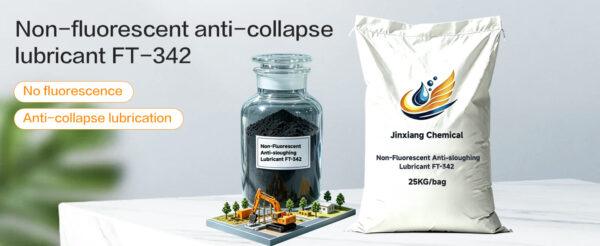
- Solid powder form: Free-flowing powder with compact packaging for easy storage and transportation.
- Wide compatibility: Compatible with all kinds of water-based drilling fluid systems without adversely affecting other mud properties.
- High temperature resistance: Maintains stable performance under high temperature, covering a wide range of applications.
Packaging Details
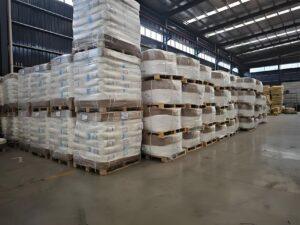
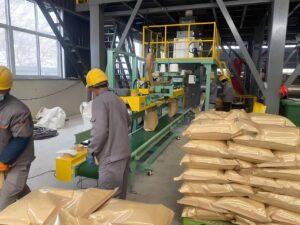
High-quality packaging keeps the product dry, clean and stable during long-distance transportation, preventing moisture absorption and caking.
- Storage: Store in a cool, dry and well-ventilated area. Keep away from direct sunlight, rain and high temperature.
- Shelf Life: 2 years under proper storage conditions.
- Transportation: Non-hazardous goods, available for sea and land transportation with easy loading and unloading.
Application Method
- Preparation: Add the product directly in dry powder form, or dissolve it with clean water before addition.
- Addition: Slowly add into the mud system under stirring, and circulate for 15-20 minutes until fully dispersed.
- Dosage adjustment: The normal dosage is 0.5%–2.0%. Increase the dosage appropriately for sections prone to collapse and high friction.
FAQ
1. What is the primary function of the non-fluorescent anti-sloughing lubricant in drilling fluids?
It is primarily used for wellbore stability, anti-sloughing, and lubrication/drag reduction. The product helps reduce friction between the drill string and the wellbore and improves the lubricating properties of the drilling fluid, while providing supplementary stabilization for formations prone to sloughing or caving.
2. Why is it called a “non-fluorescent” anti-sloughing lubricant?
“Non-fluorescent” means the product is designed to minimize interference with fluorescence-based geological logging observations, making it particularly suitable for oil and gas drilling operations that require fluorescence detection. Specific fluorescence ratings should be based on actual product test results.
3. Which drilling fluid systems is this product primarily suitable for?
It is mainly used in water-based drilling fluid (WBM) systems, particularly those requiring a balance of wellbore stability, lubrication/drag reduction, and geological logging compatibility.
4. What drilling issues can it address?
It primarily addresses problems such as wellbore sloughing and caving, high drill string friction and torque, increased drag during tripping operations, and friction control in directional or horizontal wells.
5. How does it improve wellbore stability?
The product provides a sealing and lubricating effect on the wellbore wall and cuttings surfaces, helping to mitigate adverse interactions between the drilling fluid and sensitive formations, thereby reducing the risk of sloughing and caving.
6. How is its lubricating effect demonstrated?
It helps reduce frictional resistance between the drill string, cuttings, and the wellbore wall, thereby improving the lubricating performance of the drilling fluid and assisting in the reduction of torque and drag.
7. Is the non-fluorescent anti-sloughing lubricant suitable for directional and horizontal wells?
Yes, it is suitable. Directional and horizontal wells typically involve larger contact areas between the drill string and the wellbore, resulting in higher demands for lubrication and friction control; this product can be considered for use based on the specific drilling fluid system on-site.
8. What is the product’s temperature resistance?
The current product is positioned for a temperature resistance range of 120–180°C; however, official technical specifications should be based on actual TDS data, laboratory high-temperature aging tests, and the specific product grade.
9. Can it be used in conjunction with KCl, K-PAM, and PHPA?
Yes, it can be used alongside them depending on the system formulation. While KCl, K-PAM, and PHPA primarily enhance shale inhibition and encapsulation, this non-fluorescent anti-sloughing lubricant focuses on preventing sloughing, assisting in wellbore stability, and providing lubrication and drag reduction; together, they form a more comprehensive wellbore stability solution.
10. How does it differ from standard drilling fluid lubricants?
Standard lubricants primarily focus on reducing the friction coefficient. In addition to lubrication and drag reduction, this non-fluorescent anti-sloughing lubricant emphasizes anti-sloughing properties, wellbore stability, and low/non-fluorescence characteristics, making it better suited for drilling operations with specific requirements regarding geological logging.
11. Under what circumstances is this product recommended?
It is highly recommended when clients report issues such as wellbore sloughing or spalling, increased drill string friction, high torque, or significant resistance during tripping operations, particularly when there is sensitivity to fluorescence interference during logging.
12. What is the recommended dosage?
The specific dosage should be determined based on formation characteristics, well type, the drilling fluid system, temperature, and target lubrication performance. It is recommended to conduct laboratory compatibility and lubrication performance tests before determining the optimal dosage for field application.
13. Can you provide the COA, TDS, and MSDS?
Yes, technical documents such as the COA, TDS, and MSDS can be provided. Specific parameters—such as temperature resistance, fluorescence grade, and lubrication coefficient—should be based on actual product specifications and batch test results.
Factory scene