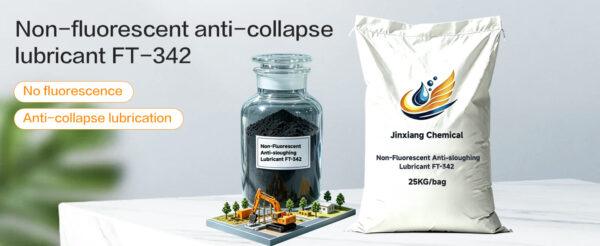
Lubrifiant anti-affaissement non fluorescent
Description du produit
Présentation du produit
Main Features & Functions
- Propriété non fluorescente: N'interfère pas avec l'interprétation des données de diagraphie, ce qui en fait la solution idéale pour le forage d'exploration et de développement.
- Lubrification supérieure et réduction de la traînée: Réduit considérablement le coefficient de frottement, diminue le couple et la résistance au déraillement, et prolonge la durée de vie des outils de forage.
- Puissant effet anti-décapage et inhibiteur: Limite l'hydratation, la dilatation et la dispersion du schiste, stabilise le puits de forage et réduit au minimum les risques d'effondrement et d'écaillage.
- Sous forme de poudre solide: Poudre fluide conditionnée dans un emballage compact, facile à ranger et à transporter.
- Large compatibilité: Compatible avec tous les types de fluides de forage à base d'eau, sans altérer les autres propriétés de la boue.
- Résistance aux hautes températures: Offre des performances stables à haute température et convient à un large éventail d'applications.
Packaging Details
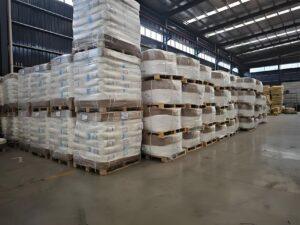
Un emballage de haute qualité permet de conserver le produit au sec, propre et stable pendant le transport sur de longues distances, en empêchant l'absorption d'humidité et l'agglomération.
- Stockage: À conserver dans un endroit frais, sec et bien aéré. À protéger de la lumière directe du soleil, de la pluie et des températures élevées.
- Durée de conservation: 2 ans dans des conditions de conservation adéquates.
- Transports: Marchandises non dangereuses, pouvant être transportées par voie maritime et terrestre, faciles à charger et à décharger.
Méthode d'application
- Préparation: Ajoutez le produit directement sous forme de poudre sèche, ou dissolvez-le dans de l'eau propre avant de l'ajouter.
- Ajout: Ajouter progressivement dans le circuit de boue tout en remuant, puis faire circuler pendant 15 à 20 minutes jusqu'à dispersion complète.
- Ajustement de la posologie: La dose normale est comprise entre 0,51 TP3T et 2,01 TP3T. Augmentez la dose de manière appropriée pour les sections sujettes à l'affaissement et présentant un frottement élevé.
FAQ
1. What is the primary function of the non-fluorescent anti-sloughing lubricant in drilling fluids?
It is primarily used for wellbore stability, anti-sloughing, and lubrication/drag reduction. The product helps reduce friction between the drill string and the wellbore and improves the lubricating properties of the drilling fluid, while providing supplementary stabilization for formations prone to sloughing or caving.
2. Why is it called a “non-fluorescent” anti-sloughing lubricant?
“Non-fluorescent” means the product is designed to minimize interference with fluorescence-based geological logging observations, making it particularly suitable for oil and gas drilling operations that require fluorescence detection. Specific fluorescence ratings should be based on actual product test results.
3. Which drilling fluid systems is this product primarily suitable for?
It is mainly used in water-based drilling fluid (WBM) systems, particularly those requiring a balance of wellbore stability, lubrication/drag reduction, and geological logging compatibility.
4. What drilling issues can it address?
It primarily addresses problems such as wellbore sloughing and caving, high drill string friction and torque, increased drag during tripping operations, and friction control in directional or horizontal wells.
5. How does it improve wellbore stability?
The product provides a sealing and lubricating effect on the wellbore wall and cuttings surfaces, helping to mitigate adverse interactions between the drilling fluid and sensitive formations, thereby reducing the risk of sloughing and caving.
6. How is its lubricating effect demonstrated?
It helps reduce frictional resistance between the drill string, cuttings, and the wellbore wall, thereby improving the lubricating performance of the drilling fluid and assisting in the reduction of torque and drag.
7. Is the non-fluorescent anti-sloughing lubricant suitable for directional and horizontal wells?
Yes, it is suitable. Directional and horizontal wells typically involve larger contact areas between the drill string and the wellbore, resulting in higher demands for lubrication and friction control; this product can be considered for use based on the specific drilling fluid system on-site.
8. What is the product’s temperature resistance?
The current product is positioned for a temperature resistance range of 120–180°C; however, official technical specifications should be based on actual TDS data, laboratory high-temperature aging tests, and the specific product grade.
9. Can it be used in conjunction with KCl, K-PAM, and PHPA?
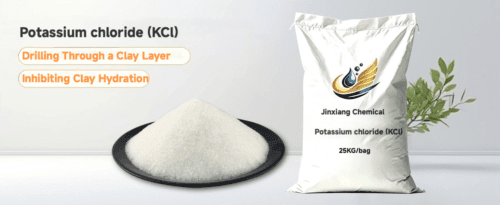
Yes, it can be used alongside them depending on the system formulation. While KCl, K-PAM, and PHPA primarily enhance shale inhibition and encapsulation, this non-fluorescent anti-sloughing lubricant focuses on preventing sloughing, assisting in wellbore stability, and providing lubrication and drag reduction; together, they form a more comprehensive wellbore stability solution.
10. How does it differ from standard drilling fluid lubricants?
Standard lubricants primarily focus on reducing the friction coefficient. In addition to lubrication and drag reduction, this non-fluorescent anti-sloughing lubricant emphasizes anti-sloughing properties, wellbore stability, and low/non-fluorescence characteristics, making it better suited for drilling operations with specific requirements regarding geological logging.
11. Under what circumstances is this product recommended?
It is highly recommended when clients report issues such as wellbore sloughing or spalling, increased drill string friction, high torque, or significant resistance during tripping operations, particularly when there is sensitivity to fluorescence interference during logging.
12. What is the recommended dosage?
The specific dosage should be determined based on formation characteristics, well type, the drilling fluid system, temperature, and target lubrication performance. It is recommended to conduct laboratory compatibility and lubrication performance tests before determining the optimal dosage for field application.
13. Can you provide the COA, TDS, and MSDS?
Yes, technical documents such as the COA, TDS, and MSDS can be provided. Specific parameters—such as temperature resistance, fluorescence grade, and lubrication coefficient—should be based on actual product specifications and batch test results.
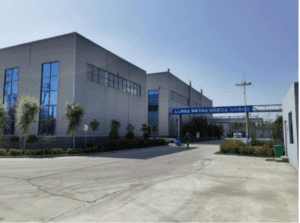
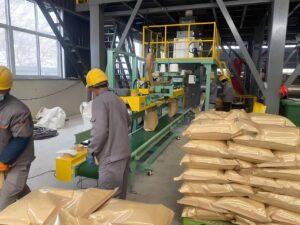
Factory scene