用于钻井液的多阴离子纤维素(PAC)
产品介绍
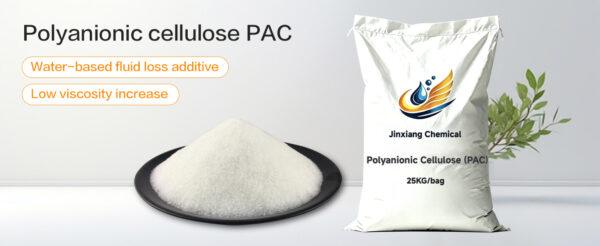
聚阴离子纤维素(PAC) 是一种高性能的水溶性纤维素聚合物,具有出色的失液控制、增稠、井壁保护和悬浮性能。它能有效提高钻井液的稳定性,最大限度地减少滤液侵入,维持井壁完整性,并降低井下故障的风险。.
该产品具有优异的耐盐性和耐钙性,以及卓越的热稳定性,在淡水、海水和高盐度钻井液系统中均能保持稳定的性能。它适用于复杂的地层和各种钻井环境。 金翔化工提供低粘度(PAC-LV)和高粘度(PAC-HV)两种等级的产品,以满足各种钻井条件下对流变性能和流失控制的具体要求。.
产品特点
- 出色的流体损失控制性能
- 有效的增稠能力
- 提高钻孔壁的稳定性
- 极强的耐盐性和耐钙性
- 良好的热稳定性
- 与大多数水基钻井液系统兼容
- 溶解迅速,使用方便
- 产品质量稳定;适用于各种复杂的岩层
应用
- 水基钻井液系统
- 石油和天然气钻探
- 页岩气钻探
- 水井钻探
- 地热井钻探
- 定向钻井与水平钻井
- 高盐度地层中的钻井作业
产品优势
- 稳定的产品质量
- 支持OEM定制
- 厂家直供
- 全面的技术支持
- 产品性能可根据客户需求进行调整
包装与储存:
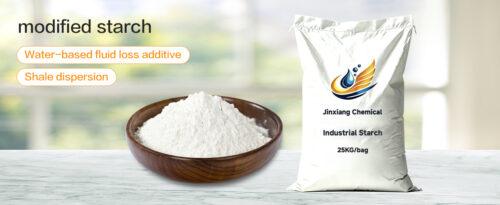
- 25公斤牛皮纸袋
- 支持OEM包装
- 请存放在阴凉、干燥、通风良好的地方;避免受潮和阳光直射。开封后请立即重新密封。.
常见问题解答
1. What is the primary function of Polyanionic Cellulose (PAC) in oil drilling fluids?
PAC is primarily used as a fluid loss control agent, viscosifier, and rheology modifier; it helps reduce fluid loss, improve filter cake quality, and maintain the stability of the drilling fluid system.
2. What is the difference between PAC-LV and PAC-HV?
PAC-LV (Low Viscosity) is mainly used to control fluid loss while minimizing the impact on drilling fluid viscosity; PAC-HV (High Viscosity) controls fluid loss while providing a more significant viscosifying and rheology-modifying effect. Customers wishing to reduce fluid loss without significantly increasing viscosity typically prioritize PAC-LV.
3. For which drilling fluid systems is PAC primarily suitable?
PAC is mainly used in water-based drilling fluids (WBM) and is applicable to fresh water, brine, and various polymer-based drilling fluid systems.
4. How does PAC reduce drilling fluid fluid loss?
PAC is a water-soluble polymer that helps improve the distribution of solid particles and the structure of the filter cake within the drilling fluid. It facilitates the formation of a denser, lower-permeability filter cake, thereby reducing the invasion of the liquid phase into the formation.
5. Can PAC be used in brine drilling fluids?
Yes. Appropriate grades of PAC exhibit good tolerance to saline environments and can be used in brine drilling fluid systems. However, specific salt tolerance should be verified through testing based on the type of salt, concentration, temperature, and product grade.
6. Can PAC be used in high-temperature drilling fluids?
It can be used in drilling fluid systems within a certain temperature range, though elevated temperatures may affect polymer performance. For high-temperature wells, it is recommended to conduct hot-rolling aging and fluid loss tests based on actual bottom-hole temperatures and, if necessary, use it in conjunction with high-temperature-resistant fluid loss control agents.
7. Can PAC be used with KCl, K-PAM, PHPA, and xanthan gum?
Yes. In suitable water-based drilling fluid formulations, PAC can be used in conjunction with additives such as **KCl, K-PAM, PHPA, and Xanthan Gum** to achieve fluid loss control, shale inhibition, encapsulation, and the adjustment of rheological and cuttings-carrying properties.
8. What is the difference between PAC and CMC?
Both can be used for fluid loss and rheology control in water-based drilling fluids. PAC typically emphasizes high-efficiency fluid loss control and compatibility with various drilling fluid systems; CMC also functions to increase viscosity and reduce fluid loss. The specific choice should be determined based on salinity, temperature, target viscosity, and fluid loss requirements.
9. When should PAC-LV be selected?
PAC-LV is the preferred choice when fluid loss is high, but the drilling fluid viscosity is already elevated or further viscosity increases are undesirable.
10. When should PAC-HV be selected?
PAC-HV is a suitable choice when there is a need to reduce fluid loss while simultaneously improving drilling fluid viscosity, suspension capabilities, and cuttings-carrying performance.
11. Can PAC help improve the filter cake?
Yes. PAC helps form a dense, low-permeability filter cake, thereby reducing filtrate invasion into the formation and aiding in wellbore stability and reservoir protection.
12. What is the recommended dosage of PAC?
The specific dosage depends on the drilling fluid system, salinity, temperature, solids content, and API/HTHP fluid loss control targets. It is recommended to determine the optimal dosage through laboratory formulation testing rather than relying on a fixed addition ratio.
13. What are the packaging specifications for PAC?
Standard packaging is 25 kg/bag; customized packaging is also available to meet specific customer needs or export/shipping requirements.
14. Can you provide the COA, TDS, and MSDS for PAC?
Yes, technical documents such as COA, TDS, and MSDS can be provided. Specific parameters—such as viscosity, fluid loss performance, moisture content, and purity—are subject to the actual product grade and the test results of the specific batch.
-500x205.jpg "聚丙烯酸钾(K-PAM)")