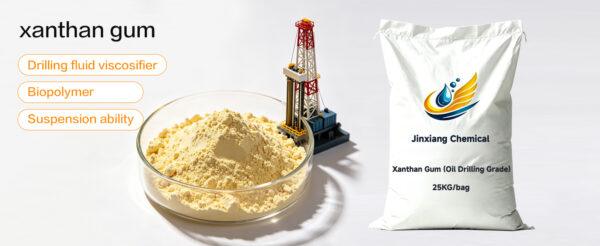
黄原胶——增稠剂
产品概述
黄原胶是一种通过微生物发酵生产的高分子量生物聚合物,专为油井钻井液设计。它可作为高效增稠剂、防失水剂和悬浮剂。.
该产品在高温、高盐度和高钙含量条件下仍能保持稳定的流变性能,可有效稳定井壁并促进岩屑输送。该产品广泛应用于深井、定向井、水平井以及盐水基钻井液系统。.
主要特性与功能
- 出色的剪切变稀性能:静态粘度高,可有效悬浮岩屑;泵送时粘度低,流动性更好,钻井效率更高。.
- 出色的耐热性和耐盐性:在高温及高盐度/饱和卤水系统中性能稳定。.
- 有效控制流体损失:形成致密、低渗透性的滤饼,以减少滤液侵入并保护地层。.
- 强大的切削物承载能力:能有效悬浮重晶石和加重剂,清洁井眼并防止沉降。.
- 兼容性良好:与各种钻井液添加剂兼容,适用于淡水、海水和卤水系统。.
- 环保:可生物降解且低毒
包装与存储
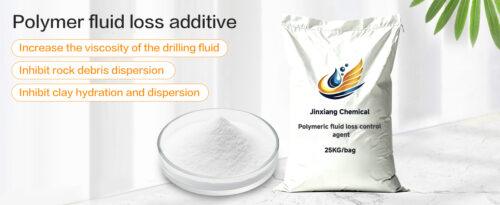
- 包装:每袋25公斤,牛皮纸袋/带PE内衬的编织袋。.
- 储存:应存放在阴凉、干燥、通风良好的地方,避免受潮、阳光直射和高温。.
- 保质期:在适当储存条件下为2年。.
- 运输:非危险品,适合海运和陆运。.
应用方法
- 可直接作为干粉添加,或先配制成0.5%–2.0%溶液,再加入钻井液中。.
- 推荐用量:泥浆体积的0.1%–0.4%,具体用量应根据井深、温度和流变学要求进行调整。.
- 添加过程中应充分搅拌,并循环15–20分钟,直至均匀分散。.
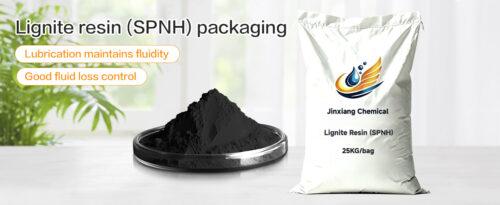
- 可与PAC、淀粉、褐煤树脂及其他添加剂配合使用,以获得更佳的综合性能。.
常见问题解答
1. What is the primary function of xanthan gum in oil-well drilling fluids?
Xanthan gum serves primarily as a viscosifier, rheology modifier, and suspending agent; it enhances the low-shear viscosity and cuttings-carrying capacity of the drilling fluid, helping to suspend drill cuttings and solid particles such as barite.
2. For which drilling fluid systems is xanthan gum primarily suitable?
It is mainly used in water-based mud (WBM) systems, including fresh water, brine, and various polymer-based systems.
3. How does xanthan gum improve cuttings-carrying capacity?
Xanthan gum offers excellent rheology modification capabilities, increasing the fluid’s viscosity and suspension performance under low-shear conditions, thereby facilitating the transport of drill cuttings from the bottom of the well to the surface.
4. Can xanthan gum prevent barite sag?
Xanthan gum enhances the suspension capacity of drilling fluids, helping to reduce the risk of settling (sagging) for barite and other solid particles. However, actual performance depends on factors such as fluid density, rheological parameters, temperature, and the overall formulation.
5. What is the difference between xanthan gum and CMC/PAC?
Xanthan gum is primarily used for viscosification, rheology modification, and improving suspension and cuttings-carrying capacity. In contrast, while CMC and PAC also adjust viscosity, they are more commonly used for fluid loss control and filter cake improvement. They can be used in combination within drilling fluid formulations as needed.
6. Can xanthan gum be used in conjunction with KCl, K-PAM, and PHPA?
Yes. In appropriate water-based drilling fluid systems, xanthan gum can be combined with additives such as KCl, K-PAM, PHPA, PAC, and CMC to achieve comprehensive performance characteristics, including rheology control, shale inhibition, encapsulation, and fluid loss control.
7. Is xanthan gum suitable for high-salinity environments?
Drilling-grade xanthan gum is generally suitable for water-based systems with certain salinity levels; however, specific salt tolerance depends on the product grade, salt type, salt concentration, and system formulation. Product TDS specifications and laboratory test results should be consulted.
8. Is xanthan gum suitable for high-temperature drilling?
Xanthan gum can be used in various drilling environments, though elevated temperatures may affect its long-term rheological performance. For high-temperature wells, aging tests should be conducted based on actual downhole temperatures, and the formulation should be determined in conjunction with high-temperature resistant additives.
9. What is the recommended dosage of xanthan gum?
The dosage should be determined based on target viscosity, wellbore size, drilling fluid density, salinity, temperature, and cuttings-carrying requirements. It is recommended to determine the optimal dosage through laboratory formulation testing; specifying a fixed dosage in product literature is not recommended.
10. Can xanthan gum be used directly as a fluid loss control agent?
Xanthan gum’s primary function is not specifically fluid loss control. If the customer’s main issue is excessive API or HTHP fluid loss, it is recommended to use it in combination with PAC, CMC, modified starch, or specialized polymer fluid loss control agents.
11. What are the packaging specifications for xanthan gum?
Standard packaging is 25 kg per bag; customized packaging is available to meet export shipping and customer requirements.
12. Can COA, TDS, and MSDS documents be provided for the xanthan gum?
Yes, technical documents such as COA, TDS, and MSDS can be provided. Specific product specifications—such as viscosity, purity, moisture content, and particle size—are subject to the actual supplied grade and batch test results.
13. Under what circumstances is xanthan gum recommended to customers?
Drilling-grade xanthan gum is highly recommended when customers encounter issues such as insufficient drilling fluid viscosity, poor cuttings-carrying capacity, inadequate low-shear suspension properties, or the tendency of solids to settle.
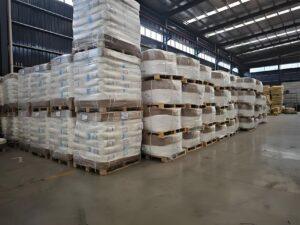
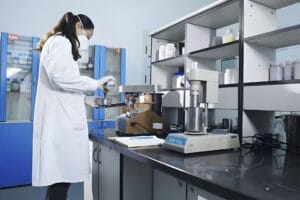
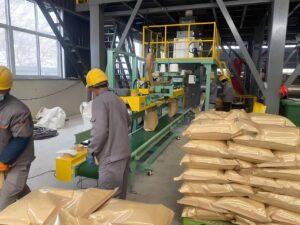
Factory scene