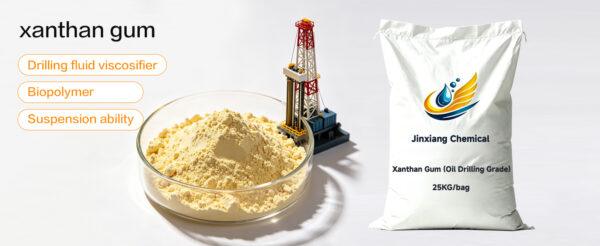
Xanthan Gum – Thickening Agent
Product Overview
Xanthan gum is a high-molecular-weight biopolymer produced via microbial fermentation, specifically designed for use in oil drilling fluids. It serves as a highly efficient viscosifier, fluid-loss control agent, and suspending agent.
The product maintains stable rheological properties under conditions of high temperature, high salinity, and high calcium content, effectively stabilizing the wellbore and facilitating cuttings transport. It is widely used in deep wells, directional wells, horizontal wells, and brine-based drilling fluid systems.
Key Features & Functions
- Excellent shear-thinning property: high static viscosity for superior cuttings suspension; low viscosity under pumping for better fluidity and higher drilling efficiency.
- Outstanding thermal and salt resistance: stable performance in high temperature and high-salinity / saturated brine systems.
- Effective fluid loss control: forms compact, low-permeability filter cake to reduce filtrate invasion and protect formation.
- Strong cuttings carrying capacity: effectively suspends barite and weighting materials, cleans wellbore and prevents settling.
- Good compatibility: compatible with various drilling fluid additives, suitable for fresh water, seawater and brine systems.
- Eco-friendly: biodegradable and low-toxic
Packaging & Storage
- Packaging: 25kg per bag, kraft paper bag / woven bag with PE liner.
- Storage: Store in cool, dry and ventilated place, avoid moisture, direct sunlight and high temperature.
- Shelf life: 2 years under proper storage.
- Transportation: Non-hazardous, suitable for sea and land transportation.
Application Method
- Can be added directly as dry powder, or prepared into 0.5%–2.0% solution before adding to drilling fluid.
- Recommended dosage: 0.1%–0.4% by volume of mud, adjusted according to well depth, temperature and rheological requirements.
- Stir sufficiently during addition and circulate for 15–20 minutes until evenly dispersed.
- Can be used together with PAC, starch, lignite resin and other additives for better comprehensive performance.
FAQ
1. What is the primary function of xanthan gum in oil-well drilling fluids?
Xanthan gum serves primarily as a viscosifier, rheology modifier, and suspending agent; it enhances the low-shear viscosity and cuttings-carrying capacity of the drilling fluid, helping to suspend drill cuttings and solid particles such as barite.
2. For which drilling fluid systems is xanthan gum primarily suitable?
It is mainly used in water-based mud (WBM) systems, including fresh water, brine, and various polymer-based systems.
3. How does xanthan gum improve cuttings-carrying capacity?
Xanthan gum offers excellent rheology modification capabilities, increasing the fluid’s viscosity and suspension performance under low-shear conditions, thereby facilitating the transport of drill cuttings from the bottom of the well to the surface.
4. Can xanthan gum prevent barite sag?
Xanthan gum enhances the suspension capacity of drilling fluids, helping to reduce the risk of settling (sagging) for barite and other solid particles. However, actual performance depends on factors such as fluid density, rheological parameters, temperature, and the overall formulation.
5. What is the difference between xanthan gum and CMC/PAC?
Xanthan gum is primarily used for viscosification, rheology modification, and improving suspension and cuttings-carrying capacity. In contrast, while CMC and PAC also adjust viscosity, they are more commonly used for fluid loss control and filter cake improvement. They can be used in combination within drilling fluid formulations as needed.
6. Can xanthan gum be used in conjunction with KCl, K-PAM, and PHPA?
Yes. In appropriate water-based drilling fluid systems, xanthan gum can be combined with additives such as KCl, K-PAM, PHPA, PAC, and CMC to achieve comprehensive performance characteristics, including rheology control, shale inhibition, encapsulation, and fluid loss control.
7. Is xanthan gum suitable for high-salinity environments?
Drilling-grade xanthan gum is generally suitable for water-based systems with certain salinity levels; however, specific salt tolerance depends on the product grade, salt type, salt concentration, and system formulation. Product TDS specifications and laboratory test results should be consulted.
8. Is xanthan gum suitable for high-temperature drilling?
Xanthan gum can be used in various drilling environments, though elevated temperatures may affect its long-term rheological performance. For high-temperature wells, aging tests should be conducted based on actual downhole temperatures, and the formulation should be determined in conjunction with high-temperature resistant additives.
9. What is the recommended dosage of xanthan gum?
The dosage should be determined based on target viscosity, wellbore size, drilling fluid density, salinity, temperature, and cuttings-carrying requirements. It is recommended to determine the optimal dosage through laboratory formulation testing; specifying a fixed dosage in product literature is not recommended.
10. Can xanthan gum be used directly as a fluid loss control agent?
Xanthan gum’s primary function is not specifically fluid loss control. If the customer’s main issue is excessive API or HTHP fluid loss, it is recommended to use it in combination with PAC, CMC, modified starch, or specialized polymer fluid loss control agents.
11. What are the packaging specifications for xanthan gum?
Standard packaging is 25 kg per bag; customized packaging is available to meet export shipping and customer requirements.
12. Can COA, TDS, and MSDS documents be provided for the xanthan gum?
Yes, technical documents such as COA, TDS, and MSDS can be provided. Specific product specifications—such as viscosity, purity, moisture content, and particle size—are subject to the actual supplied grade and batch test results.
13. Under what circumstances is xanthan gum recommended to customers?
Drilling-grade xanthan gum is highly recommended when customers encounter issues such as insufficient drilling fluid viscosity, poor cuttings-carrying capacity, inadequate low-shear suspension properties, or the tendency of solids to settle.
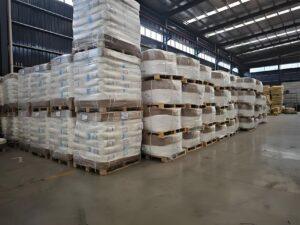
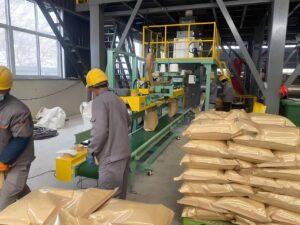
Factory scene


-500x205.jpg "聚丙烯酸钾(K-PAM)")