Solusi Fluida Pengeboran Berbasis Air
Bidang Aplikasi
Pengeboran Formasi Serpih
Sumur Dalam dan Sangat Dalam
Platform Pengeboran Lepas Pantai
Kondisi Tekanan dan Suhu Tinggi (HPHT) serta Formasi Kompleks
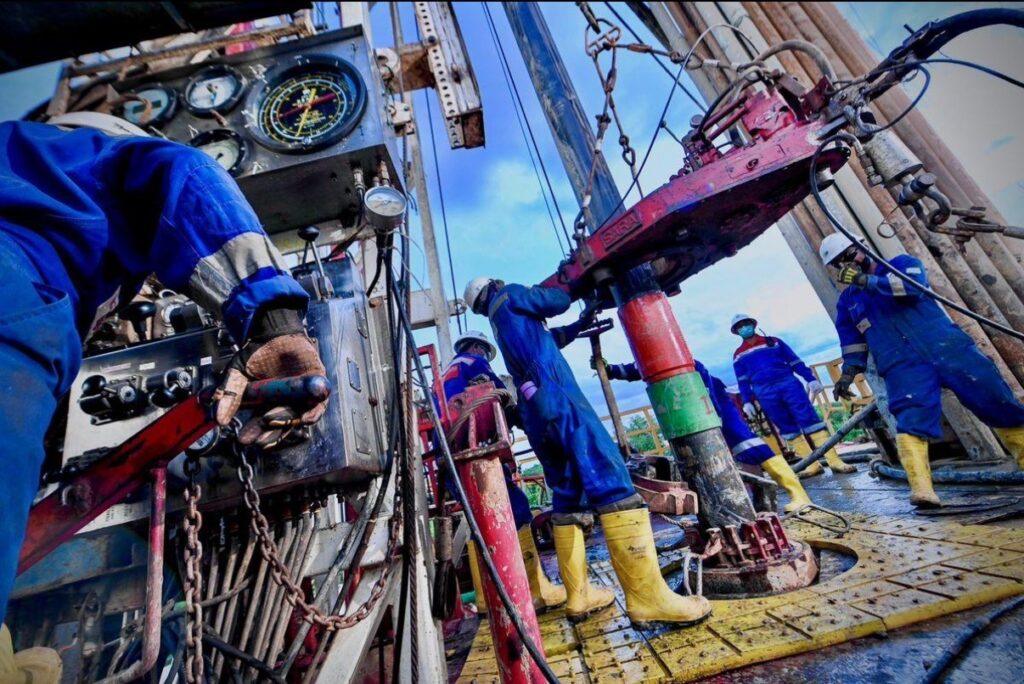
Water-based drilling fluids use water or brine as the continuous phase. Their performance depends on a balanced additive package for shale inhibition, filtration control, rheology and cuttings transport. The formulation must suit the formation, source-water chemistry and anticipated downhole conditions.Jinxiang Chemical supplies K-PAM, PHPA, CMC, PAC-LV/HV, xanthan gum, modified starch, sulfonated asphalt, polymer fluid loss additives, potassium chloride, lignite resin SPNH and sulfonated phenolic resin. We support grade selection and compatible formulation screening for shale formations, directional wells, offshore operations and temperature-specific applications.
Gambaran Umum Solusi
Water-based drilling fluids must balance shale inhibition, filtration control, cuttings transport and stable rheology. The following problems are addressed through formulation-specific product selection and laboratory evaluation.
Jenis produk, dosis, dan batas operasi bergantung pada formulasi lengkap. Mintalah TDS yang berlaku dan pastikan kompatibilitas melalui pengujian laboratorium.
Shale Hydration, Cuttings Dispersion and Wellbore Instability
Masalah dan kemungkinan penyebab: Reactive shale can soften, swell or disperse after contact with the water phase. Typical signs include sticky cuttings, increased fines, bit balling, tight-hole conditions and rising torque or drag. Formation mineralogy, exposure time and the inhibition level of the complete mud system influence the response.Pendekatan solusi dan pemilihan produk: Evaluate potassium chloride and K-PAM for inhibition, and PHPA for cuttings encapsulation, using the actual formation and source water. Check shale recovery or dispersion results alongside mud rheology and filtration. The objective is to maintain cuttings integrity and a compatible inhibitive system; product selection should follow formation-specific testing.Excessive Fluid Loss and Poor Filter Cake Quality
Masalah dan kemungkinan penyebab: High filtrate invasion can produce an unsuitable filter cake and contribute to formation damage or differential sticking. Review API and HTHP filtration results, cake thickness and texture, water chemistry and the solids distribution. Filtrate loss through a permeable formation and losses of whole mud are different mechanisms.Pendekatan solusi dan pemilihan produk: Screen PAC-LV/HV, CMC, modified starch and polymer fluid loss additives for the required filtration performance. Where appropriate, evaluate sulfonated asphalt, SPNH and sulfonated phenolic resin as part of the complete package. Compare results before and after aging instead of selecting an additive only by its product name.Insufficient Cuttings Transport and Solids Suspension
Masalah dan kemungkinan penyebab: In directional and horizontal sections, poor carrying capacity can allow cuttings to accumulate, while excessive viscosity can increase circulation resistance. A mud with an acceptable funnel viscosity may still have unsuitable low-shear properties. Review low-speed rheometer readings, gel strengths, solids content and the well profile.Pendekatan solusi dan pemilihan produk: Xanthan gum can support low-shear viscosity and suspension in a compatible formulation. PAC-HV or an appropriate CMC grade may contribute viscosity where that function is required. Balance carrying capacity with manageable rheology and assess the complete fluid, including its density and solids loading.Salt, Calcium and Source-Water Contamination
Masalah dan kemungkinan penyebab: Changes in salinity or hardness can alter polymer hydration, viscosity and filtration performance. Contamination may appear as a sudden rheology change, increased filtrate or inconsistent mixing response. Freshwater laboratory results do not establish performance in seawater, brine or hard water.Pendekatan solusi dan pemilihan produk: Provide source-water analysis, chloride concentration, calcium or hardness data and pH when requesting a grade. Compare suitable PAC, CMC, starch and polymer grades using the actual water and anticipated contamination. Confirm compatibility between inhibitors, viscosifiers and filtration additives rather than assuming one grade suits every water chemistry.Thermal Degradation and Unstable Rheology
Masalah dan kemungkinan penyebab: Elevated temperature can change the effectiveness of polymers and filtration additives. Possible symptoms include viscosity loss, excessive gel development or worsening HTHP filtration after aging. Surface measurements alone may not represent the expected downhole exposure.Pendekatan solusi dan pemilihan produk: Evaluate suitable polymer fluid loss additives, lignite resin SPNH and sulfonated phenolic resin for the intended temperature and mud chemistry. Use hot-aging tests followed by rheology, gel and filtration measurements. Applicable temperature limits depend on the specific grade, exposure time and complete formulation.Solids Build-Up, High Viscosity and Rising Torque
Masalah dan kemungkinan penyebab: Fine drilled solids and dispersed cuttings can raise viscosity, weaken fluid control and increase torque or drag. Adding more polymer without identifying the cause may further increase viscosity. Distinguish a carrying-capacity requirement from a problem caused by excessive solids or formation dispersion.Pendekatan solusi dan pemilihan produk: Review solids-control performance, solids loading and inhibition before adjusting the additive package. PHPA and inhibitive additives can support cuttings integrity where appropriate. For filtration control with limited additional viscosity, compare PAC-LV with suitable low-viscosity CMC or polymer grades in laboratory tests.Choosing PAC-LV, PAC-HV and a Compatible Additive Package
Masalah dan kemungkinan penyebab: PAC-LV and PAC-HV both support filtration control, but their viscosity contributions differ. A formulation that already has adequate carrying capacity may need a different grade from one requiring both filtration and viscosity adjustment.Pendekatan solusi dan pemilihan produk: Share the existing mud composition, target rheology and filtration results. Select complementary functions across K-PAM, PHPA, PAC, CMC, xanthan gum, starch and resin additives, then verify compatibility as a package. Request grade-specific TDS and recommended laboratory screening guidance from Jinxiang Chemical.Contact Jinxiang Chemical dengan menyertakan komposisi lumpur saat ini, hasil pengujian, kondisi sumur, dan jumlah yang dibutuhkan.| Nama Produk | Karakteristik Kinerja | Bidang Aplikasi |
|---|---|---|
| Poliakrilat Kalium (K-PAM) | Penghambatan serpih dan enkapsulasi serbuk bor. | Lumpur berbasis air dengan sifat penghambatan. |
| Poliakrilamida Terhidrolisis Sebagian (PHPA) | Enkapsulasi serbuk bor dan pengendalian dispersi. | Lumpur polimer berbasis air. |
| Karboksimetil Selulosa (CMC) | Pengendalian kehilangan filtrat; kontribusi terhadap viskositas bergantung pada jenis produk. | Pengelolaan filtrasi dan viskositas. |
| Selulosa Polianionik Viskositas Rendah / Tinggi (PAC-LV / PAC-HV) | Pengendalian filtrasi dengan kontribusi viskositas rendah atau lebih tinggi. | Lumpur berbasis air yang membutuhkan reologi sesuai jenis produk. |
| Gum Xanthan | Viskositas pada laju geser rendah dan suspensi padatan. | Pengangkutan serbuk bor pada sumur berarah dan horizontal. |
| Pati Termodifikasi | Pengurangan kehilangan filtrat dan pembentukan kerak filter. | Sistem yang kompatibel dalam batas operasi jenis produk. |
| Serbuk Aspal Tersulfonasi | Penyekatan tambahan dan pengendalian filtrasi. | Formulasi berbasis air yang dipilih berdasarkan kesesuaian. |
| Aditif Polimer Pengendali Kehilangan Filtrat | Pengendalian filtrasi dengan ketahanan suhu dan salinitas sesuai jenis produk. | Kondisi operasi terpilih yang telah diverifikasi melalui pengujian. |
| Kalium Klorida (KCl) | Penghambatan hidrasi lempung yang sensitif terhadap air. | Sistem lumpur KCl-polimer. |
| Resin Lignit (SPNH) | Pengendalian filtrasi pada formulasi bersuhu tinggi yang sesuai. | Sistem yang telah diverifikasi melalui uji penuaan termal. |
| Resin Fenolik Tersulfonasi | Pengendalian filtrasi pada suhu tinggi. | Fluida pengeboran berbasis air yang kompatibel. |
Pertanyaan yang Sering Diajukan
Can K-PAM and PHPA be used together?
They may provide complementary inhibition and encapsulation functions in a compatible water-based formulation. Suitability depends on the selected grades, formation behavior, salinity and the existing additive package. Evaluate the combination with the actual mud and cuttings rather than assuming a universal mixing ratio.How should I choose a filtration additive?
Compare the required filtration performance with viscosity contribution, source-water chemistry and temperature exposure. PAC-LV, PAC-HV, CMC, modified starch, polymers and resin additives serve different formulation needs. Review the TDS and laboratory results for the complete package, including aged-fluid results where relevant.What information is needed for product selection?
Provide the mud composition, water analysis, formation type, salinity, hardness, pH, density and expected temperature. Include available rheology, gel, filtration and shale-test results, the current problem and required quantity. This allows Jinxiang Chemical to identify suitable grades for your screening program.Dukungan Teknis
Optimasi Sistem Lumpur Pengeboran
Mengoptimalkan sistem fluida pengeboran berdasarkan kondisi geologi untuk meningkatkan stabilitas lubang sumur dan kinerja pengeboran.
Pengujian Laboratorium
Mengevaluasi kompatibilitas fluida pengeboran dan kinerja produk melalui pengujian laboratorium sebelum penerapan di lapangan.
Pemilihan Produk
Merekomendasikan aditif fluida pengeboran sesuai karakteristik formasi, suhu, salinitas, dan kebutuhan pengeboran.
Formulasi Khusus
Mengembangkan formulasi fluida pengeboran khusus untuk formasi sulit, sumur dalam, dan lingkungan pengeboran khusus.