Решения для буровых растворов на водной основе
Области применения
Бурение сланцевых формаций
Глубокие и сверхглубокие скважины
Морские буровые платформы
Высокая температура и высокое давление (HPHT) и сложные пласты
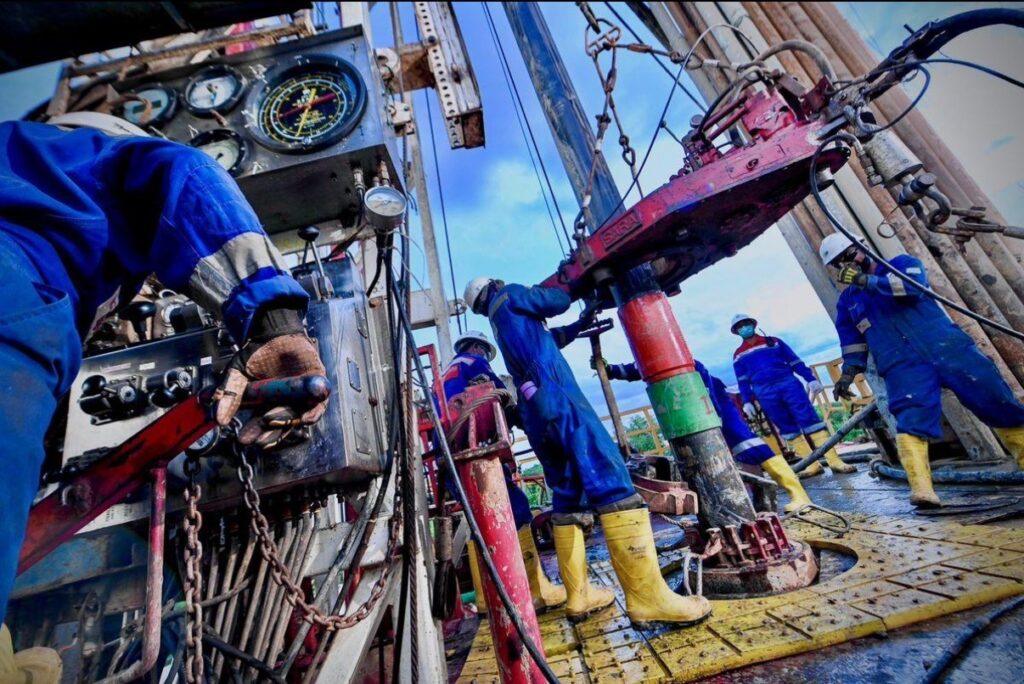
Water-based drilling fluids use water or brine as the continuous phase. Their performance depends on a balanced additive package for shale inhibition, filtration control, rheology and cuttings transport. The formulation must suit the formation, source-water chemistry and anticipated downhole conditions.Jinxiang Chemical supplies K-PAM, PHPA, CMC, PAC-LV/HV, xanthan gum, modified starch, sulfonated asphalt, polymer fluid loss additives, potassium chloride, lignite resin SPNH and sulfonated phenolic resin. We support grade selection and compatible formulation screening for shale formations, directional wells, offshore operations and temperature-specific applications.
Обзор решения
Water-based drilling fluids must balance shale inhibition, filtration control, cuttings transport and stable rheology. The following problems are addressed through formulation-specific product selection and laboratory evaluation.
Марки, дозировки и эксплуатационные ограничения зависят от полной рецептуры. Запросите соответствующий технический паспорт (TDS) и подтвердите совместимость лабораторными испытаниями.
Shale Hydration, Cuttings Dispersion and Wellbore Instability
Проблема и возможные причины: Reactive shale can soften, swell or disperse after contact with the water phase. Typical signs include sticky cuttings, increased fines, bit balling, tight-hole conditions and rising torque or drag. Formation mineralogy, exposure time and the inhibition level of the complete mud system influence the response.Подход к решению и подбор продуктов: Evaluate potassium chloride and K-PAM for inhibition, and PHPA for cuttings encapsulation, using the actual formation and source water. Check shale recovery or dispersion results alongside mud rheology and filtration. The objective is to maintain cuttings integrity and a compatible inhibitive system; product selection should follow formation-specific testing.Excessive Fluid Loss and Poor Filter Cake Quality
Проблема и возможные причины: High filtrate invasion can produce an unsuitable filter cake and contribute to formation damage or differential sticking. Review API and HTHP filtration results, cake thickness and texture, water chemistry and the solids distribution. Filtrate loss through a permeable formation and losses of whole mud are different mechanisms.Подход к решению и подбор продуктов: Screen PAC-LV/HV, CMC, modified starch and polymer fluid loss additives for the required filtration performance. Where appropriate, evaluate sulfonated asphalt, SPNH and sulfonated phenolic resin as part of the complete package. Compare results before and after aging instead of selecting an additive only by its product name.Insufficient Cuttings Transport and Solids Suspension
Проблема и возможные причины: In directional and horizontal sections, poor carrying capacity can allow cuttings to accumulate, while excessive viscosity can increase circulation resistance. A mud with an acceptable funnel viscosity may still have unsuitable low-shear properties. Review low-speed rheometer readings, gel strengths, solids content and the well profile.Подход к решению и подбор продуктов: Xanthan gum can support low-shear viscosity and suspension in a compatible formulation. PAC-HV or an appropriate CMC grade may contribute viscosity where that function is required. Balance carrying capacity with manageable rheology and assess the complete fluid, including its density and solids loading.Salt, Calcium and Source-Water Contamination
Проблема и возможные причины: Changes in salinity or hardness can alter polymer hydration, viscosity and filtration performance. Contamination may appear as a sudden rheology change, increased filtrate or inconsistent mixing response. Freshwater laboratory results do not establish performance in seawater, brine or hard water.Подход к решению и подбор продуктов: Provide source-water analysis, chloride concentration, calcium or hardness data and pH when requesting a grade. Compare suitable PAC, CMC, starch and polymer grades using the actual water and anticipated contamination. Confirm compatibility between inhibitors, viscosifiers and filtration additives rather than assuming one grade suits every water chemistry.Thermal Degradation and Unstable Rheology
Проблема и возможные причины: Elevated temperature can change the effectiveness of polymers and filtration additives. Possible symptoms include viscosity loss, excessive gel development or worsening HTHP filtration after aging. Surface measurements alone may not represent the expected downhole exposure.Подход к решению и подбор продуктов: Evaluate suitable polymer fluid loss additives, lignite resin SPNH and sulfonated phenolic resin for the intended temperature and mud chemistry. Use hot-aging tests followed by rheology, gel and filtration measurements. Applicable temperature limits depend on the specific grade, exposure time and complete formulation.Solids Build-Up, High Viscosity and Rising Torque
Проблема и возможные причины: Fine drilled solids and dispersed cuttings can raise viscosity, weaken fluid control and increase torque or drag. Adding more polymer without identifying the cause may further increase viscosity. Distinguish a carrying-capacity requirement from a problem caused by excessive solids or formation dispersion.Подход к решению и подбор продуктов: Review solids-control performance, solids loading and inhibition before adjusting the additive package. PHPA and inhibitive additives can support cuttings integrity where appropriate. For filtration control with limited additional viscosity, compare PAC-LV with suitable low-viscosity CMC or polymer grades in laboratory tests.Choosing PAC-LV, PAC-HV and a Compatible Additive Package
Проблема и возможные причины: PAC-LV and PAC-HV both support filtration control, but their viscosity contributions differ. A formulation that already has adequate carrying capacity may need a different grade from one requiring both filtration and viscosity adjustment.Подход к решению и подбор продуктов: Share the existing mud composition, target rheology and filtration results. Select complementary functions across K-PAM, PHPA, PAC, CMC, xanthan gum, starch and resin additives, then verify compatibility as a package. Request grade-specific TDS and recommended laboratory screening guidance from Jinxiang Chemical.Contact Цзиньсян Химикал и сообщите текущий состав раствора, результаты испытаний, условия скважины и требуемое количество.| Название продукта | Эксплуатационные свойства | Область применения |
|---|---|---|
| Полиакрилат калия (K-PAM) | Ингибирование глинистых сланцев и обволакивание шлама. | Ингибирующие буровые растворы на водной основе. |
| Частично гидролизованный полиакриламид (PHPA) | Обволакивание шлама и регулирование его диспергирования. | Полимерные буровые растворы на водной основе. |
| Карбоксиметилцеллюлоза (CMC) | Регулирование фильтрации; влияние на вязкость зависит от марки. | Регулирование фильтрации и вязкости. |
| Полианионная целлюлоза низкой / высокой вязкости (PAC-LV / PAC-HV) | Регулирование фильтрации с небольшим или более выраженным повышением вязкости. | Буровые растворы на водной основе с требованиями к реологии, учитывающими выбранную марку. |
| Ксантановая камедь | Вязкость при низком сдвиге и суспендирование твердых частиц. | Вынос шлама в наклонно-направленных и горизонтальных скважинах. |
| Модифицированный крахмал | Снижение фильтрации и формирование фильтрационной корки. | Совместимые системы в пределах эксплуатационных ограничений конкретной марки. |
| Порошок сульфированного асфальта | Дополнительная герметизация и регулирование фильтрации. | Подобранные рецептуры на водной основе. |
| Полимерная добавка для снижения фильтрации | Регулирование фильтрации с термо- и солестойкостью, зависящими от марки. | Подобранные условия эксплуатации, подтвержденные испытаниями. |
| Хлорид калия (KCl) | Ингибирование гидратации чувствительных к воде глин. | Системы буровых растворов KCl-полимер. |
| Лигнитовая смола (SPNH) | Регулирование фильтрации в подходящих высокотемпературных рецептурах. | Системы, проверенные испытаниями термического старения. |
| Сульфированная фенольная смола | Регулирование фильтрации при повышенной температуре. | Совместимые буровые растворы на водной основе. |
Часто задаваемые вопросы
Can K-PAM and PHPA be used together?
They may provide complementary inhibition and encapsulation functions in a compatible water-based formulation. Suitability depends on the selected grades, formation behavior, salinity and the existing additive package. Evaluate the combination with the actual mud and cuttings rather than assuming a universal mixing ratio.How should I choose a filtration additive?
Compare the required filtration performance with viscosity contribution, source-water chemistry and temperature exposure. PAC-LV, PAC-HV, CMC, modified starch, polymers and resin additives serve different formulation needs. Review the TDS and laboratory results for the complete package, including aged-fluid results where relevant.What information is needed for product selection?
Provide the mud composition, water analysis, formation type, salinity, hardness, pH, density and expected temperature. Include available rheology, gel, filtration and shale-test results, the current problem and required quantity. This allows Jinxiang Chemical to identify suitable grades for your screening program.Техническая поддержка
Оптимизация системы бурового раствора
Оптимизация систем буровых растворов с учетом геологических условий для повышения устойчивости ствола и эффективности бурения.
Лабораторные испытания
Оценка совместимости бурового раствора и свойств продукта лабораторными испытаниями перед промысловым применением.
Подбор продукта
Рекомендации по подбору добавок с учетом характеристик пласта, температуры, солености и требований бурения.
Индивидуальная рецептура
Разработка индивидуальных рецептур буровых растворов для сложных пластов, глубоких скважин и особых условий бурения.